California Residential Lease Agreement Template (2026 PDF)
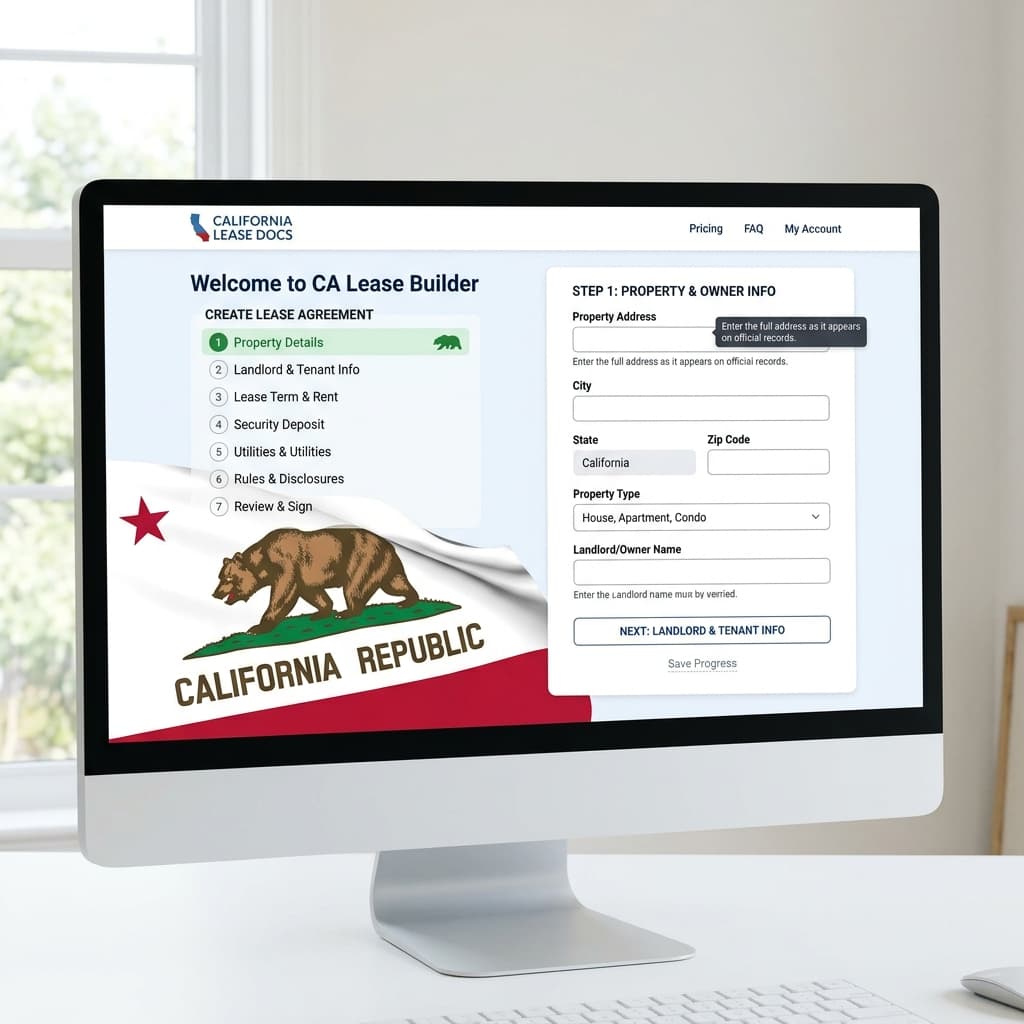
Generate a legally compliant California residential lease agreement. Learn about AB 1482, security deposit caps, and mandatory disclosures to protect your property.
Lease agreements, rental income verification, and landlord-tenant forms.
A rental agreement generates its own paper trail from application to move-out, and each document in that trail exists for a specific moment: the application establishes who is renting and whether they qualify, the lease sets the terms, receipts and notices document what happened during the tenancy, and move-in and move-out checklists and deposit paperwork close it out.
These guides cover what belongs in each of those documents, which parts are governed by state law rather than convention, and how landlords and tenants can each protect themselves with a clear record instead of a verbal understanding.
This guide is part of our Rental Documents service — lease agreements, rent receipts and notices.
Explore Rental Documents
Generate a legally compliant California residential lease agreement. Learn about AB 1482, security deposit caps, and mandatory disclosures to protect your property.

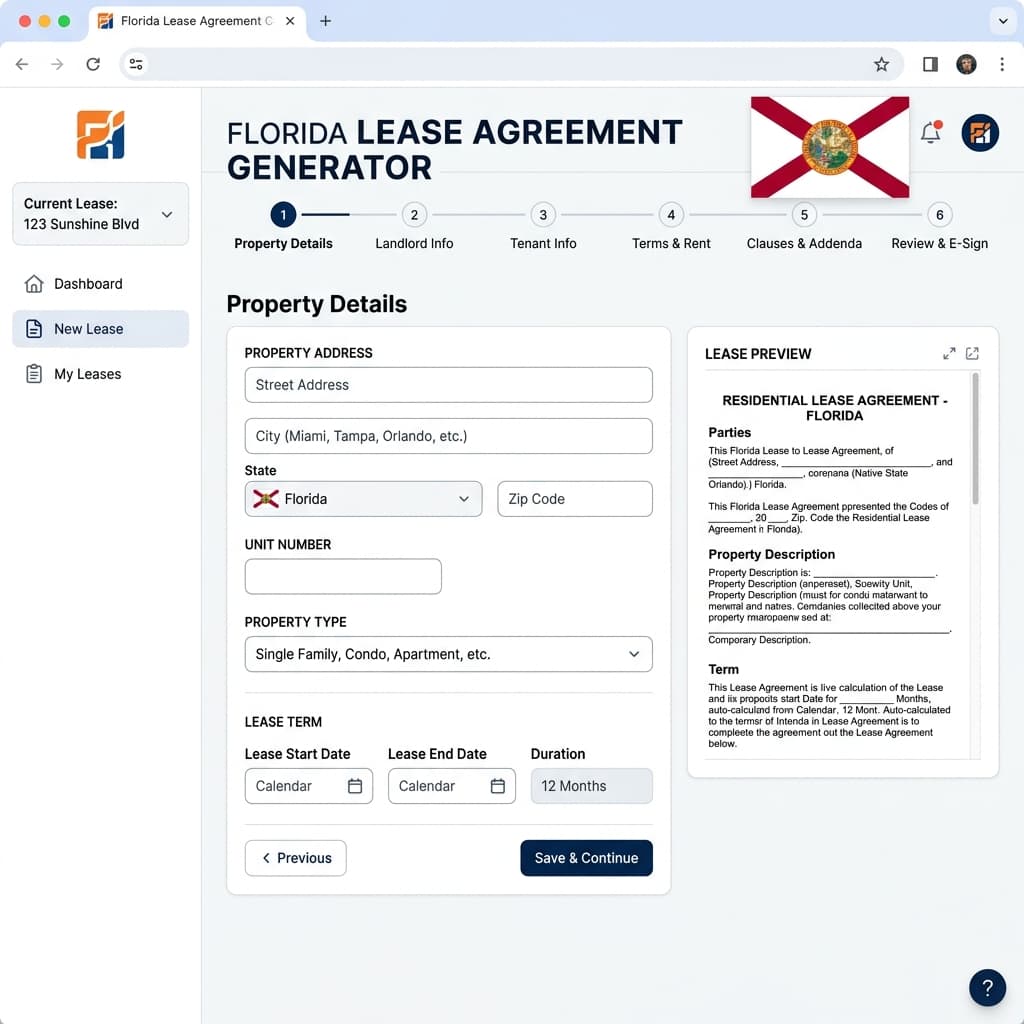
Create a compliant Florida residential lease agreement. Understand the radon disclosure, 2025 flood disclosure, 15/30-day deposit rules, and new email-notice law.

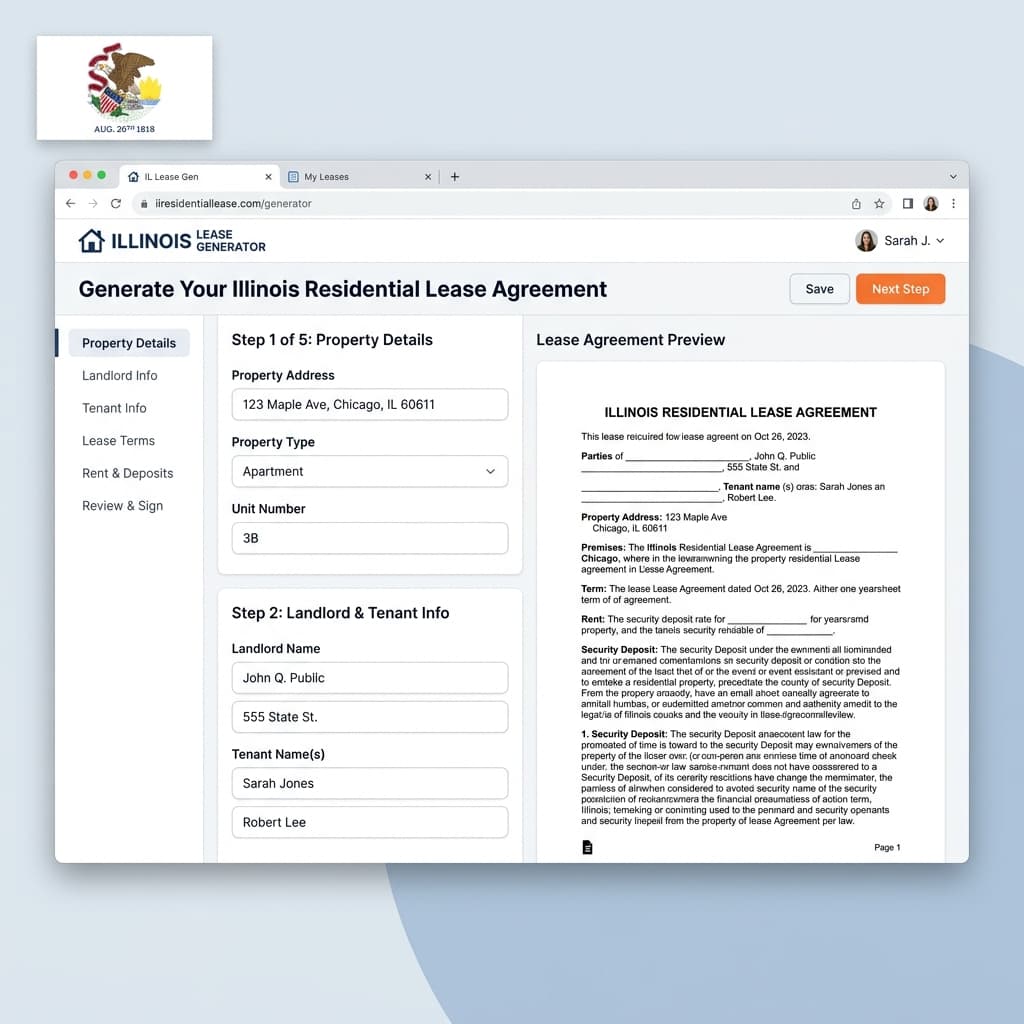
Create a compliant Illinois residential lease agreement. Understand the 30/45-day deposit timeline, mandatory radon disclosure, notice periods, and tenant remedies.

Everything you need to know about issuing a late rent notice, including grace periods, late fees, and legal delivery methods.

Learn everything you need to know about crafting a comprehensive, legally binding lease agreement that protects both landlords and tenants.

Discover everything you need to know about drafting, sending, and managing a legal lease termination letter for your rental property.

Protect your property and your security deposit by mastering the move-in checklist process. Learn what to inspect, document, and legally require.

Ensure a smooth tenant transition and protect your security deposit by mastering the final move-out checklist inspection process.

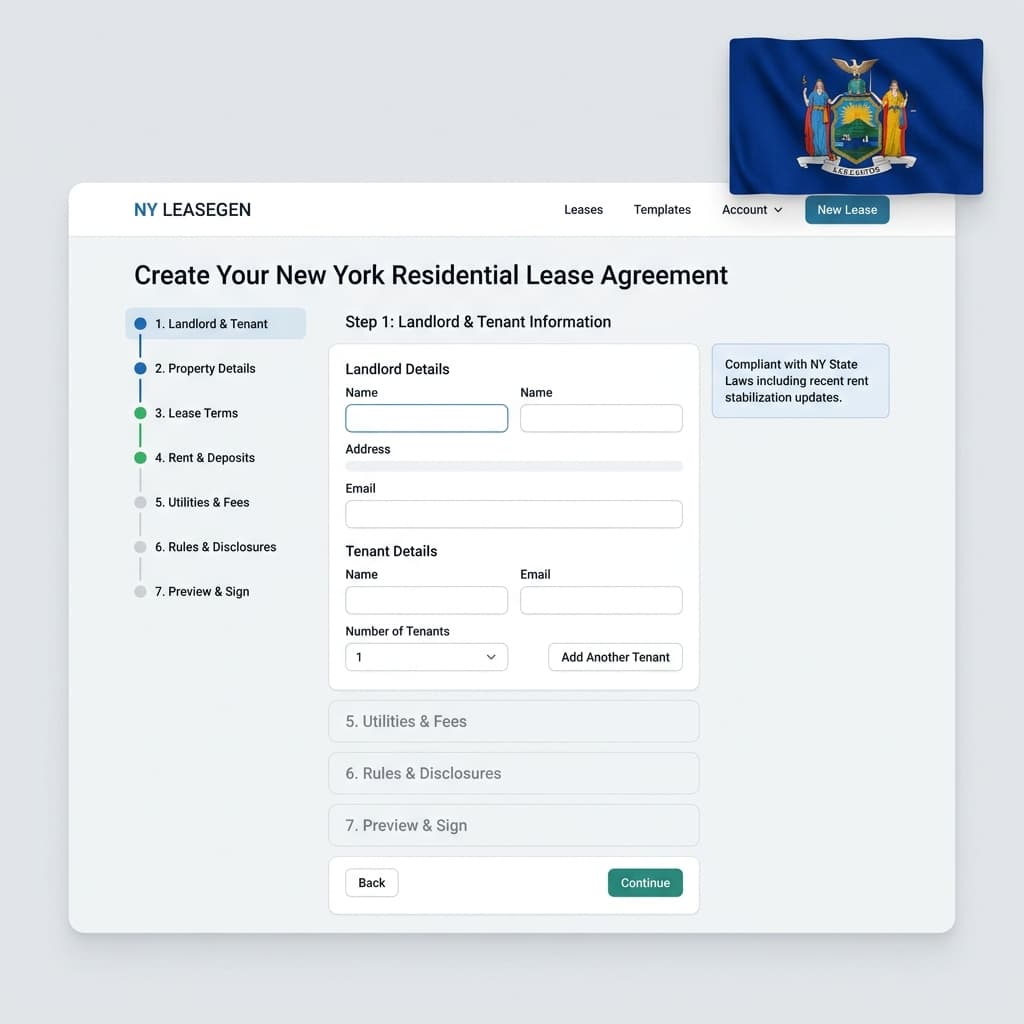
Build a compliant New York residential lease agreement. Learn the one-month deposit cap, strict 14-day return rule, rent stabilization rider, and required disclosures.

Everything landlords and tenants need to know about navigating the rental application, from legal screening criteria to spotting red flags.

Discover the best practices for rental income verification, including essential methods, legal guidelines, and the 3x rent rule for landlords and tenants.

Master the security deposit return process with our comprehensive guide, covering legal deadlines, itemized deductions, and avoiding tenant disputes.

Learn the exact requirements for Texas eviction notices, including the 3-day notice to vacate, non-payment rules, and lease violations from a Real Estate Attorney.

Learn everything you need to know about Texas late rent laws, including the mandatory 2-day grace period, maximum allowable fees (10-12%), and penalties for illegal fees.

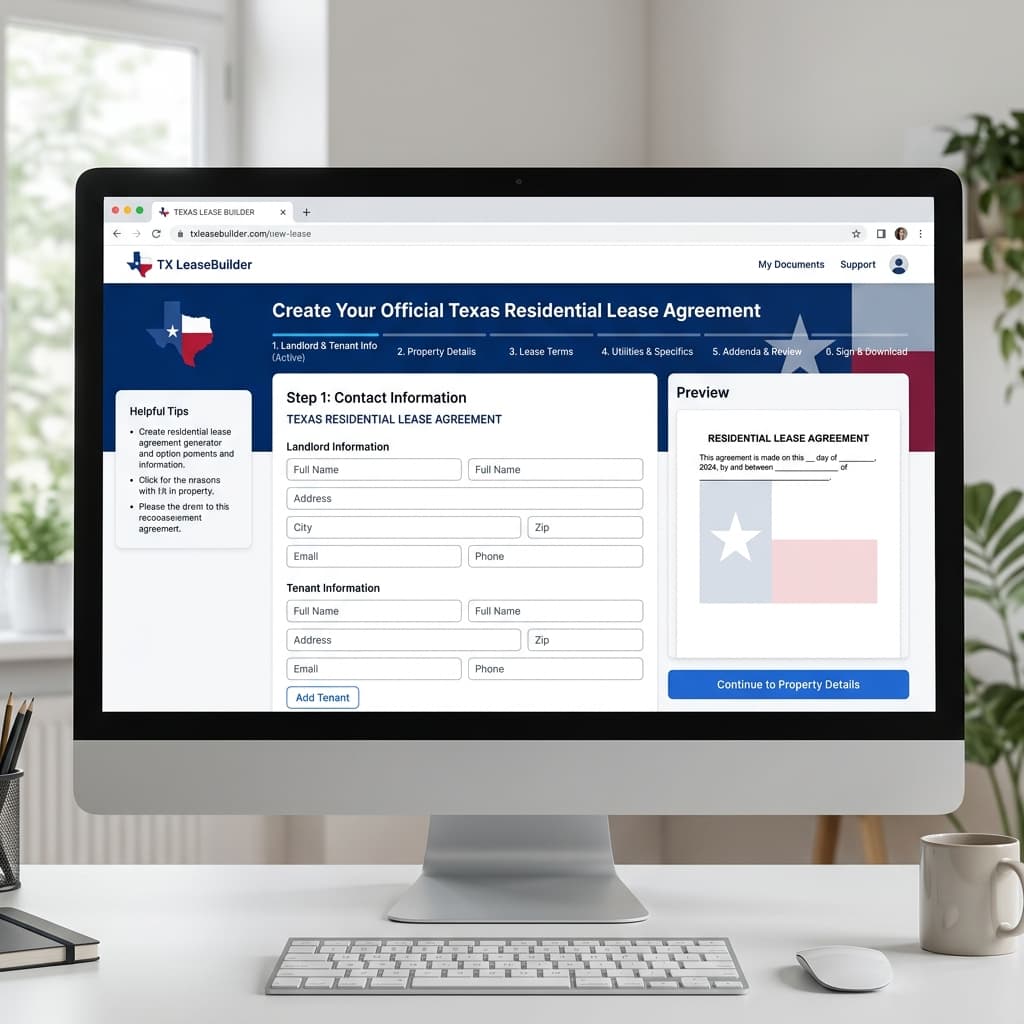
Build a compliant Texas residential lease agreement. Learn the 30-day deposit return rule, Section 92.109 penalties, required security devices, and notice to vacate.

Expert real estate attorney Sarah Jenkins details Texas security deposit laws, including limits, itemized deductions, the 30-day return window, and bad faith penalties.

How to serve an eviction notice for nonpayment of rent: the pay-or-quit notice, why notice periods vary by state, and the legal steps.

How much notice must a landlord give before entering? Standard notice periods, valid reasons, emergencies, and tenant privacy rights.

Lease vs rental agreement: the key difference in term length, renewal and flexibility, and which one you should use.

Month-to-month lease explained: how it works, the pros and cons, the notice required to end it, and what to put in the agreement.

How a notice to pay rent or quit works: what it must include, the tenant's options, and the landlord's next steps if rent stays unpaid.

Security deposit laws by state: deposit limits, return deadlines, allowed deductions, and the penalties for getting it wrong.

Sublease agreement guide: when and how to sublet, getting landlord consent, what to include, and the risks for the original tenant.
A solid lease agreement is the foundation of every rental relationship. Learn what must be in yours, common mistakes to avoid, and how to generate one fast.
Rental income verification is required for mortgage applications, tax filings, and tenant screening. Learn what documents prove rental income and how to generate a formal letter.
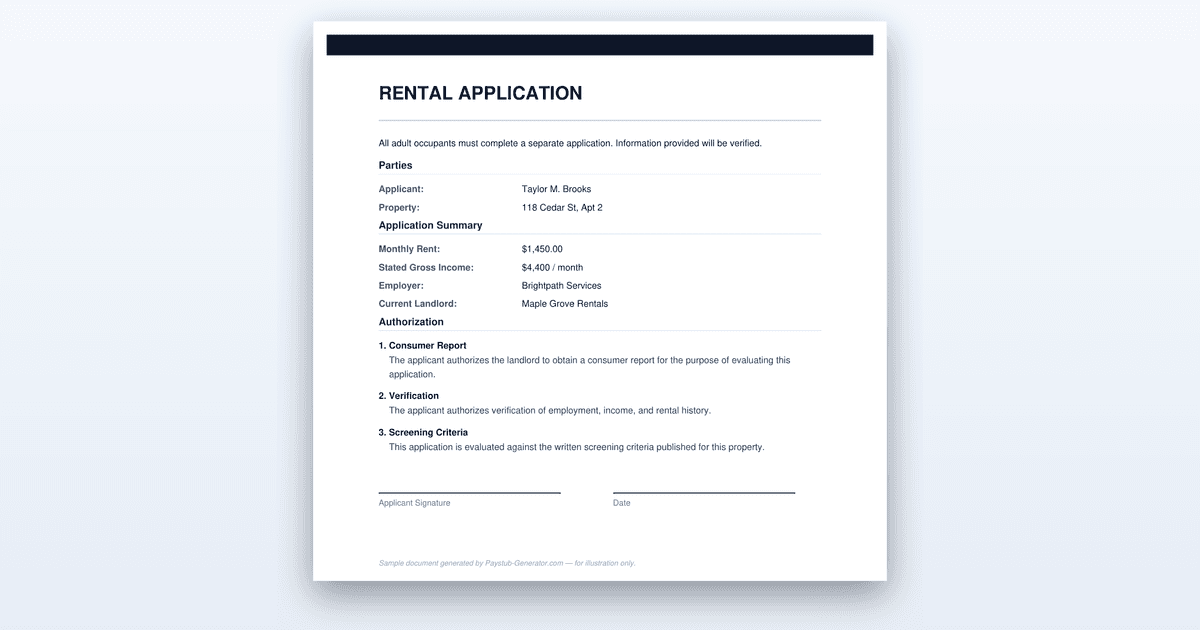
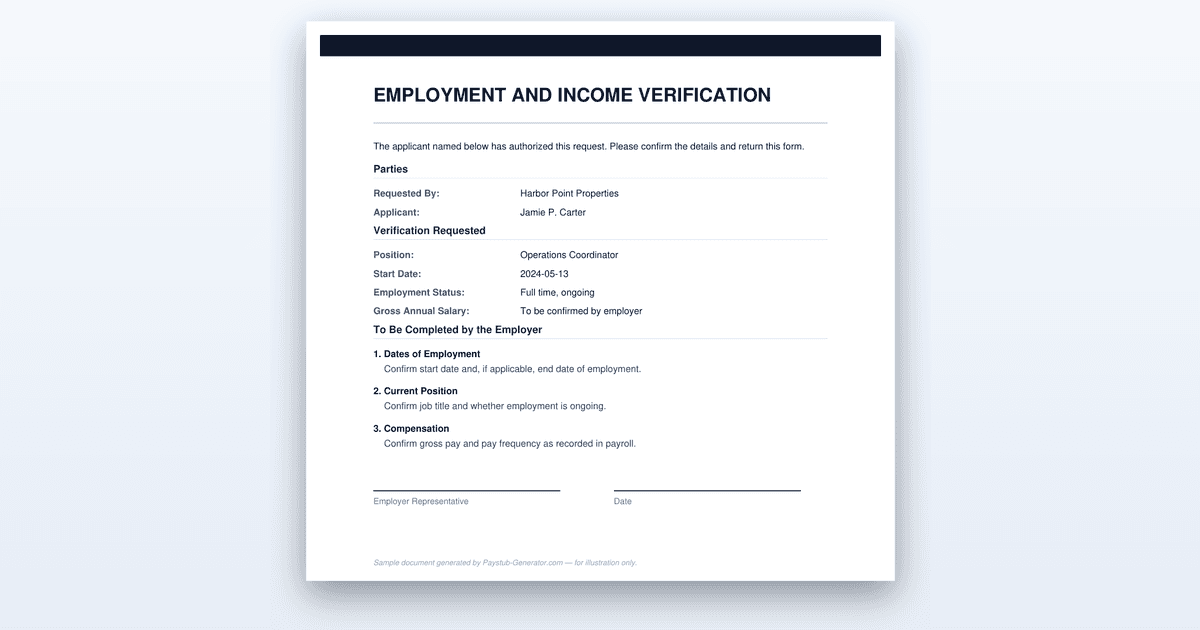
A rental application collects the information a landlord uses to decide whether to rent to someone: identity, rental history, employment and income. Income verification is usually the deciding factor, and landlords commonly apply a guideline of roughly three times the monthly rent in gross income - that is a convention landlords use, not a legal requirement, and the exact multiple varies by landlord and by market.
Applicants without a traditional pay stub - self-employed people, gig workers, new hires - typically need to substitute other proof: bank statements, 1099s, a profit-and-loss statement, or a generated proof-of-income or rental-income-verification document that lays out the same figures in a format a landlord can check.
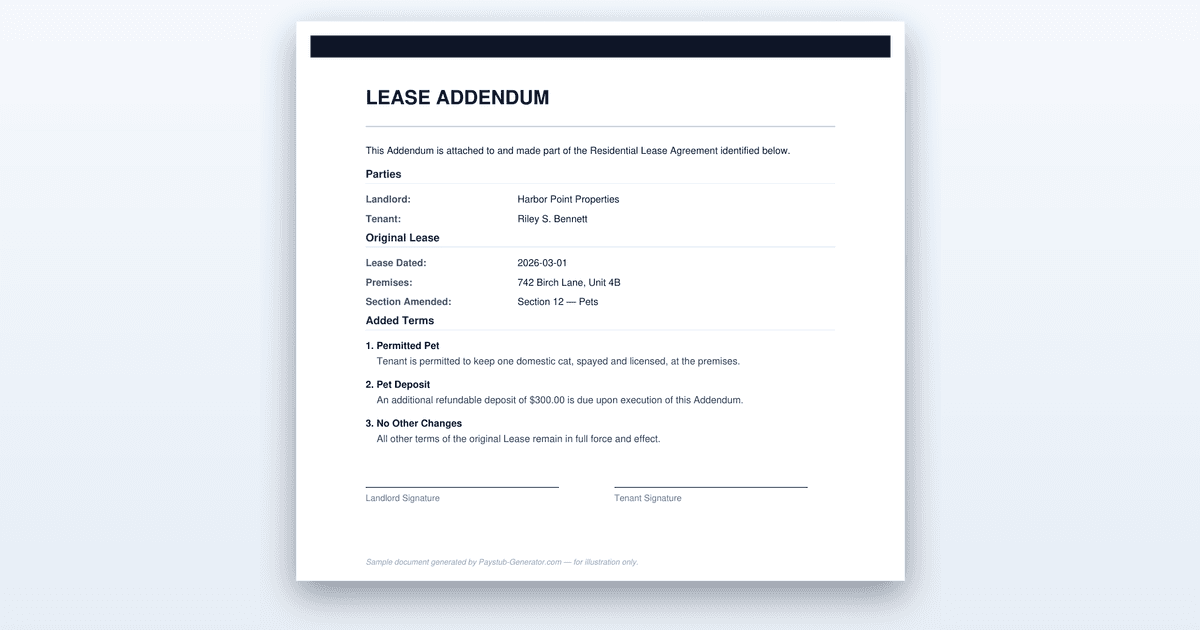
A lease agreement sets the terms both parties are bound by: rent amount and due date, lease term, security deposit amount, who is responsible for utilities and repairs, and the rules for renewal or termination. What a lease can legally require - deposit limits, notice periods, disclosures - is set by state law, and it varies enough that a lease template written for one state can be non-compliant, not just imperfect, if used in another.
A rent receipt is a smaller document with an outsized role in disputes: it is the record that a specific payment was made on a specific date, which matters when a late-payment or non-payment claim turns into a formal notice.
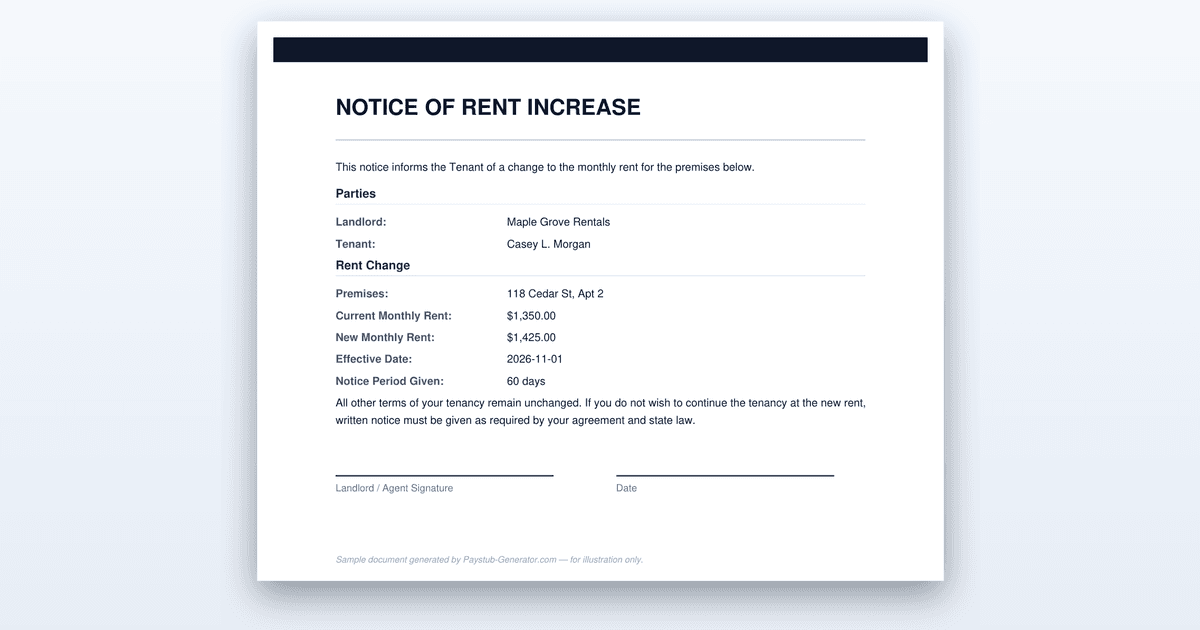
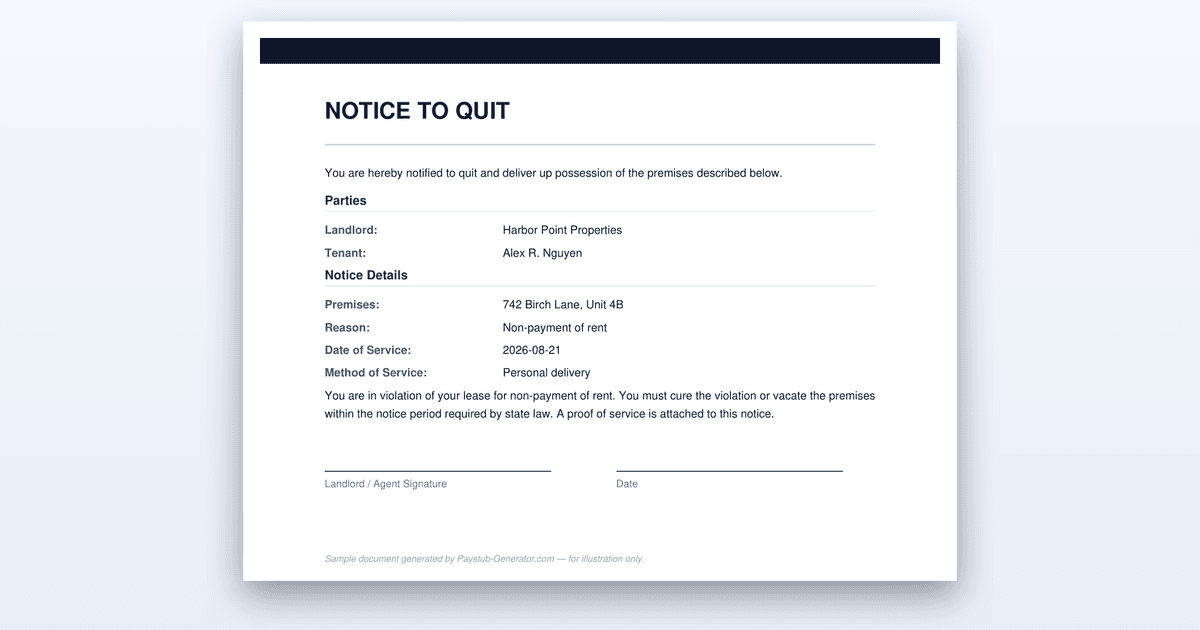
A late rent notice is typically the first formal step when rent isn't paid on time - it puts the amount owed and the deadline to cure it in writing, which is often a prerequisite before a landlord can move to a formal eviction process. The exact notice period required before further action can be taken is set by state law and varies by state, so the same notice period that's standard in one state may not meet the minimum in another.
Move-in and move-out checklists exist to settle a dispute before it happens: a documented, ideally photographed, record of the unit's condition at the start of a tenancy is what a landlord and tenant both fall back on when arguing about damage versus normal wear at the end of it.
How much a landlord can charge as a security deposit, how it must be held, how long the landlord has to return it after move-out, and what documentation must accompany any deductions are all set by state law - there is no single national figure for any of these, and treating one state's rule as universal is one of the most common mistakes in this category.
A security deposit return letter is the document that closes the tenancy financially: it itemizes what was withheld and why, alongside the balance being returned, and it is what a landlord produces to show a deduction was documented rather than arbitrary if the return is ever disputed.
It depends entirely on the state - some states cap the deposit at a set number of months' rent, others impose no cap at all. There is no single national limit, so the applicable rule is whichever state the rental property is located in.
The deadline is set by state law and varies significantly from state to state. Missing the deadline in some states can expose a landlord to penalties beyond simply returning the deposit, so the applicable timeline has to be checked against the property's own state.
A common guideline is gross monthly income of roughly three times the rent, but this is a convention individual landlords apply, not a law. Some landlords use a lower or higher multiple, and applicants below the guideline can sometimes qualify with a co-signer or additional documentation.
It depends on the state - late rent notice periods and the steps required before eviction proceedings can begin vary by jurisdiction. A notice period that satisfies the minimum in one state may fall short in another, so the notice has to match the law where the property sits.
A rental application is the screening document used to decide whether to approve a tenant, collecting income, identity and rental history. A lease agreement is the binding contract signed afterward that sets the actual terms of the tenancy - rent, deposit, term and responsibilities.
They create a dated record of the unit's condition at the start and end of a tenancy, which is what resolves disputes over what counts as damage versus normal wear when a security deposit deduction is contested. Without one, a dispute comes down to one party's word against the other's.