
New York Residential Lease Agreement Template (2026 PDF)
Paystub Generator Editorial Team
Last Updated: September 2, 2026
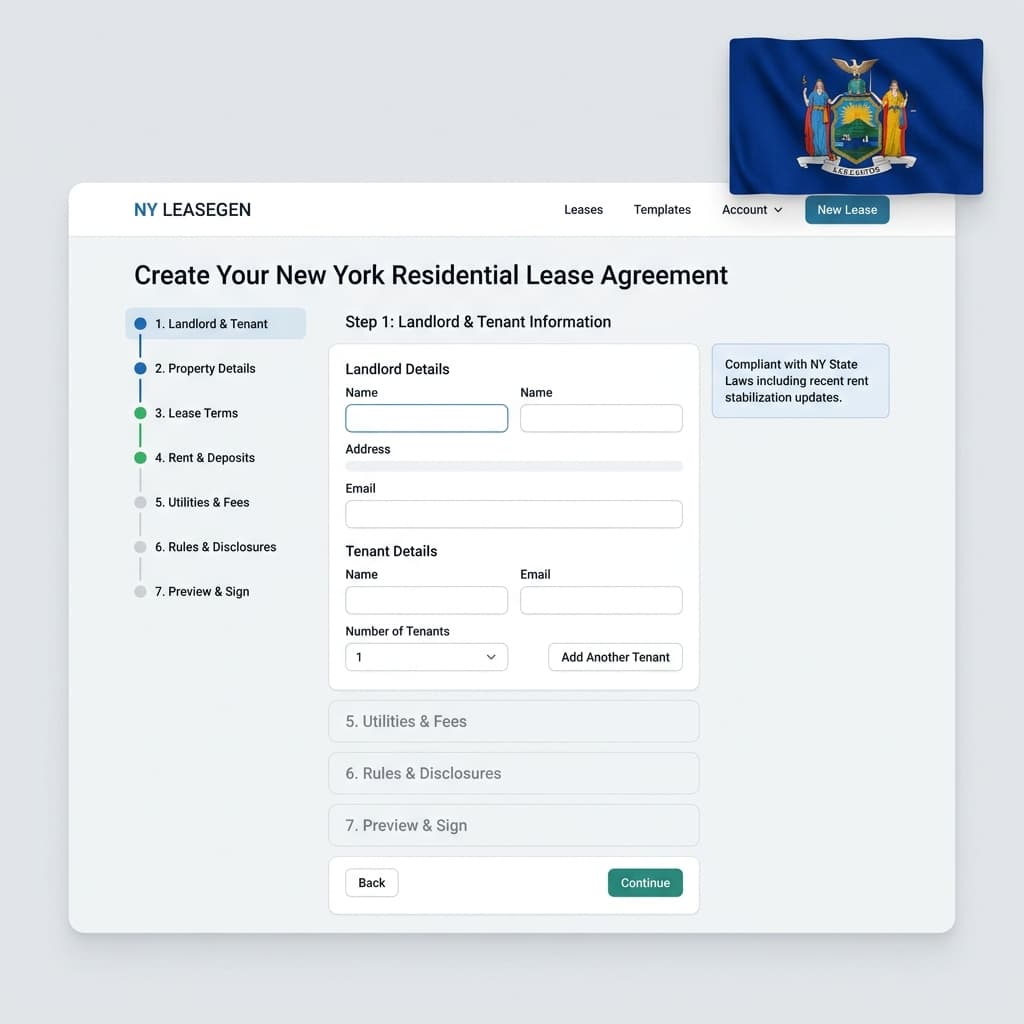
Build a compliant New York residential lease agreement. Learn the one-month deposit cap, strict 14-day return rule, rent stabilization rider, and required disclosures.
New York Residential Lease Agreement
New York has some of the most tenant-protective rental laws in the country, which makes a precise New York residential lease agreement essential for any landlord who wants to stay compliant and avoid costly penalties. Since the Housing Stability and Tenant Protection Act reshaped the landscape, the margin for error has shrunk dramatically.
Unlike many states, New York caps security deposits, enforces a strict 14-day return window, and imposes specific disclosure obligations. A generic template that ignores these rules can cost a landlord the entire deposit and more.
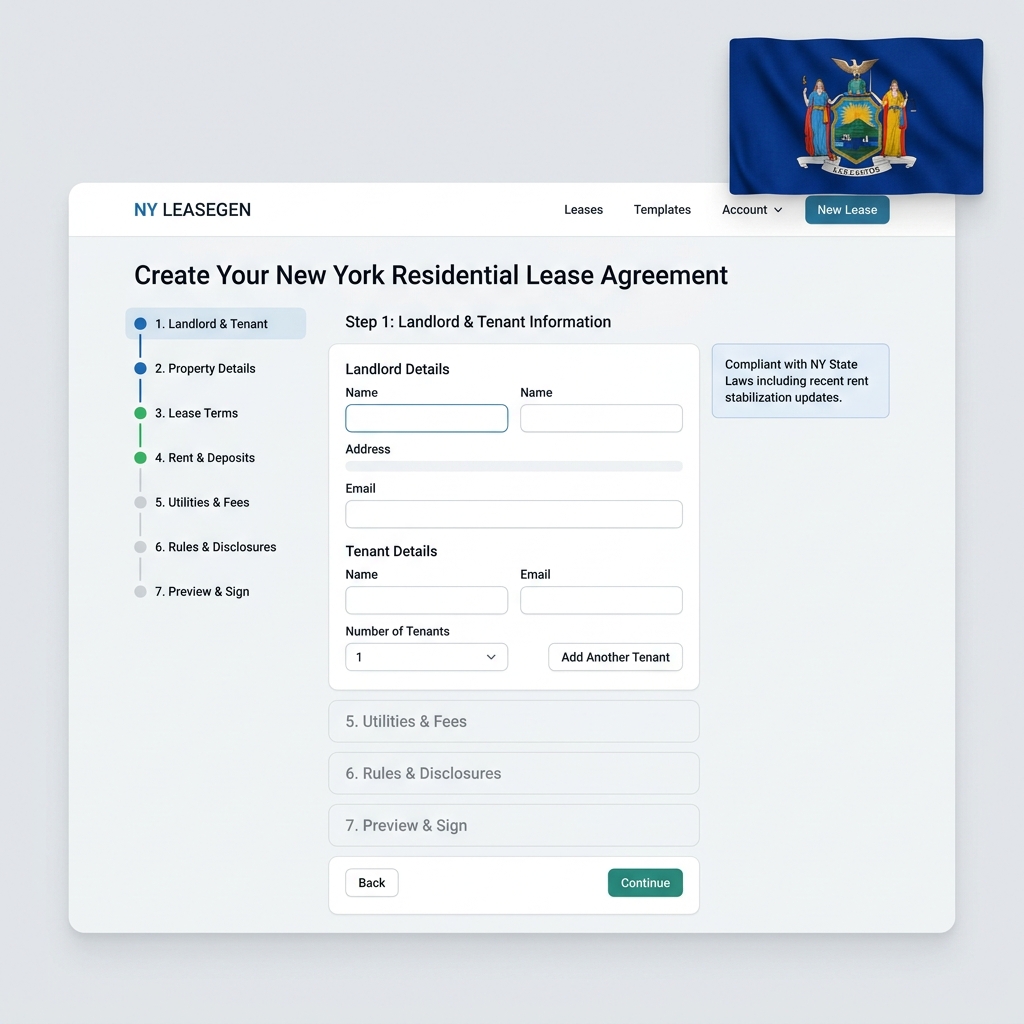
This guide explains the deposit cap and return deadline, the rent stabilization obligations that apply to many units, and the disclosures New York requires in every residential lease. When you are ready to assemble the document, our lease agreement generator produces a New York-ready contract in minutes.
Essential Terms of a New York Lease
A valid New York lease identifies every adult tenant, the property, the rent, the due date, and the term in clear language. These fundamentals anchor every right and obligation that follows.
The agreement should set out accepted payment methods and any late fee. New York limits late fees to a modest amount and only after a grace period, so the lease must reflect the statutory cap rather than an arbitrary figure.
Occupancy limits, pet policies, subletting terms, and maintenance duties round out the core terms. New York's roommate law also gives tenants certain rights to share a unit, so occupancy clauses must be drafted with that in mind.
Term and Renewal
New York landlords commonly use a fixed twelve-month term, though rent-stabilized units carry their own renewal rules. The lease should describe what happens at expiration for market-rate units.
For market-rate tenancies, New York requires advance notice before raising rent significantly or declining to renew, with the required notice increasing based on how long the tenant has lived in the unit. Building the correct notice period into your process prevents an unintended holdover.
Generate a New York Lease Agreement
Our lease agreement generator produces a complete, state-aware New York residential lease in minutes, with the required disclosures and clauses built in.
Create New York Lease AgreementNew York Security Deposit Rules
New York caps the security deposit at no more than one month's rent. Collecting more than that, or demanding last month's rent on top of a full deposit, generally violates state law.
When the tenancy ends, the landlord must return the deposit within 14 days, along with an itemized statement of any deductions. This 14-day rule is enforced strictly and leaves little room for delay.
The consequence of missing the deadline is severe. A landlord who fails to return the deposit or provide the itemization within 14 days forfeits the right to keep any portion and must return the full amount. A prompt security deposit return letter is the cleanest way to meet the deadline and document the refund.
Move-In and Move-Out Inspections
New York gives tenants the right to request a walk-through inspection before move-in and again before move-out. The landlord must offer the move-out inspection and provide an itemized statement of potential deductions in advance.
Honoring these inspection rights protects you as much as the tenant. A signed move-in checklist and a matching move-out checklist create the objective record you need to justify any deduction within the tight 14-day window.
Rent Stabilization and Regulated Units
A large share of New York City apartments, and some units elsewhere in the state, are rent-stabilized. Landlords of these units have additional obligations that go well beyond a standard lease.
Owners of rent-stabilized apartments must register with the Division of Housing and Community Renewal and provide tenants with a rent stabilization rider attached to the lease. The rider explains the tenant's rights and the legal regulated rent.
If your property is or might be regulated, confirm its status before drafting the lease. Treating a stabilized unit as market-rate is a serious error that can trigger overcharge claims and penalties.
Mandatory New York Disclosures
New York requires several disclosures in or alongside the residential lease. Omitting them weakens your position and can create direct liability.
The bed bug disclosure requires landlords to provide a history of any bed bug infestation in the building over the past year. New York City has its own version of this requirement.
Landlords must also confirm the presence of working carbon monoxide and smoke detectors. Properties built before 1978 require the federal lead-based paint disclosure, including the EPA pamphlet and any known hazard information.
Sprinkler and Window Guard Notices
New York City and some other jurisdictions require additional notices, such as a statement about whether the unit has a sprinkler system and a window guard notice for buildings with children. These local requirements stack on top of state law.
Check the property's location to determine which local notices apply. A lease that satisfies state law alone may still omit a required city-level disclosure.
Late Rent and Eviction Procedure
When a New York tenant fails to pay, the landlord must serve a 14-day demand for rent before commencing a nonpayment proceeding. The HSTPA lengthened several of these timelines in the tenant's favor.
New York eviction is a court process that cannot be shortcut. Self-help measures such as lockouts or utility shutoffs are illegal and expose the landlord to significant damages.
Serving a dated late rent notice and the required statutory demand starts the process correctly. Because New York's procedures are detailed and tenant-protective, following each step precisely is the only way to keep a case from being dismissed.
Screening New York Tenants
New York landlords may screen for income, credit, and rental history, but the rules are strict. The state limits application fees to a modest statutory cap and protects applicants from several forms of discrimination, including lawful source of income.
That means you generally cannot refuse a tenant because they intend to pay with a housing voucher. Applying the same written criteria to every applicant, focused on overall ability to pay, keeps your process consistent and lawful.
A uniform rental application gathers identical information from each applicant within the fee limits, and a documented rental income verification supports your decision without singling out a payment source.
Ending a New York Tenancy
For market-rate units, a fixed-term lease ends on its stated date, subject to the notice rules for non-renewal. For rent-stabilized units, the tenant generally has a right to a renewal lease, so non-renewal is tightly restricted.
A written lease termination letter documents exactly when notice was given for market-rate tenancies. Given New York's complex rules, confirming the unit's status before sending any termination notice is essential.
Why a New York-Specific Lease Is Worth It
A generic national template will not include New York's one-month deposit cap, the strict 14-day return rule, the rent stabilization rider, or the bed bug and window guard notices. Each omission is a place where a landlord can lose money or face penalties.
A New York-specific agreement bakes these requirements into the contract, so you are not relying on memory when a tenant asserts their rights. It converts an unusually dense body of law into one enforceable document.
In a tenant-protective state, careful documentation is your best defense. Write the lease thoroughly, follow every deadline, and you will avoid the disputes that catch unprepared landlords.
Understanding the HSTPA's Impact
The Housing Stability and Tenant Protection Act of 2019 fundamentally changed how New York landlords operate. It tightened deposit rules, lengthened notice periods, and limited many fees that were once routine.
Among its most important effects, the law capped security deposits at one month, restricted application fees, and extended the notice a landlord must give before raising rent or declining to renew. These changes apply statewide, not just in New York City.
Because the HSTPA touches nearly every stage of the tenancy, a lease drafted before 2019 is almost certainly out of date. Using a current, New York-specific lease agreement generator is the simplest way to ensure your contract reflects the law as it stands today.
Fees You Can and Cannot Charge
New York now sharply limits the fees a landlord may collect. Application fees are capped at a small statutory amount, and many move-in fees that were once common are no longer permitted.
Late fees are similarly constrained, allowed only after a grace period and capped by statute. Listing only lawful, clearly disclosed fees in the lease keeps you compliant and avoids claims that you collected money you were not entitled to.
Tenant Rights to Repairs and Habitability
New York's warranty of habitability requires landlords to keep units safe, sanitary, and fit to live in. This duty cannot be waived by the lease, and tenants have meaningful remedies when it is breached.
The lease should describe how tenants report repairs and commit the landlord to addressing problems promptly. Clear procedures reduce the chance that a tenant withholds rent or files a complaint with housing authorities.
Documenting the unit's condition with a signed move-in checklist at the start establishes a baseline. Combined with a move-out checklist, it gives you the evidence to distinguish genuine damage from ordinary wear when the deposit is settled.
Documentation Is Your Best Defense
In a state where the law leans toward tenants, the landlord who keeps meticulous records is the one who prevails in a dispute. Every notice, inspection, and refund should be dated and saved.
Keep a single organized file for each tenancy containing the signed lease, disclosures, checklists, payment history, and copies of every notice served. When a tenant challenges a deduction or a non-renewal, that file is the difference between winning and writing a check.
Before renewing a market-rate tenant, confirm they still qualify. A current rental income verification documents that the tenant can sustain the rent, turning a renewal into a deliberate, defensible decision.
Build Your New York Lease Agreement Today
You can produce a compliant New York lease without hiring an attorney for every tenancy, as long as the tool accounts for the state's strict rules. The right generator prompts you for the deposit cap, disclosures, and rider where applicable.
Our lease agreement generator walks through each clause and outputs a clean, signature-ready PDF tailored to New York. Pair it with a documented [move-in checklist](/move-i
This guide is part of our Rental Documents service — lease agreements, rent receipts and notices.
Explore Rental DocumentsRental Forms Knowledge Hub
Explore our suite of legally reviewed templates in the Rental category.

