


Complete Business Tax & Withholding Compliance Guide
Operating a commercial venture or hired contractor workforce demands active compliance with Federal and State tax guidelines. Neglecting proper employee and independent contractor paperwork risks expensive audits, civil monetary penalties, and delayed financial clearings. By integrating automated payroll calculations and standardized documentation pipelines, small businesses can easily stay ahead of tax seasons. Our real-time document generators help file cleanly under current Internal Revenue Service (IRS) standards.
1. Mastering Year-End Wage Reporting with Form W-2
For salaried employees, businesses must provide an annual summary of wage payments and federal/state/local tax withholdings on Form W-2. Filed with both the Social Security Administration (SSA) and employees before the January 31st deadline, this document tracks primary gross salary, Medicare contributions, and retirement allocations.
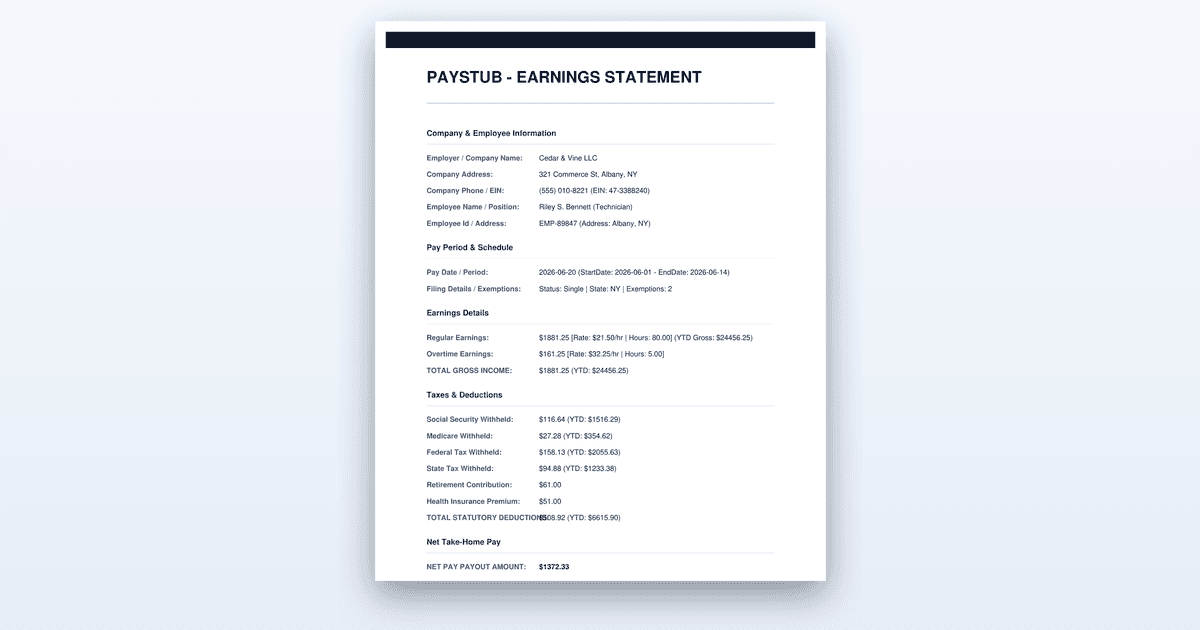
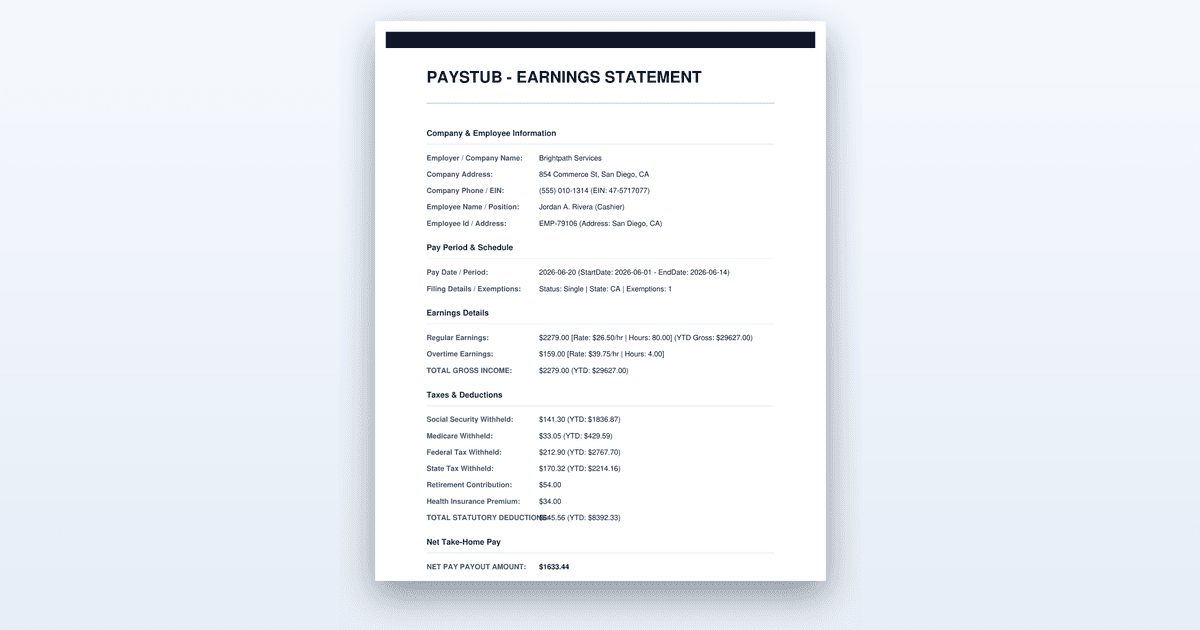
Having precise periodic calculations is a mandatory step in compiling compliant W-2 charts. Employers utilize monthly salary statements to balance gross-to-net math exactly. To maintain flawless periodic logs throughout the operating fiscal year, streamline your employee checks with our Interactive Paystub Builder.
2. Managing Nonemployee Compensation with Form 1099-NEC
When scaling operations using external independent agencies or freelancers, payments exceeding $600 within a single calendar year must be reported via Form 1099-NEC. Standardized specifically to trace nonemployee compensation, this form protects commercial ledgers from employment misclassifications.
The IRS strictly reviews business-contractor relationships to evaluate economic independence. Presenting itemized 1099 summaries with explicit contractor receipts protects your business from expensive labor compliance audits. Use our automated builder to create certified 1099-NEC Statements quickly.
3. Gathering Clean Payee Information with Form W-9
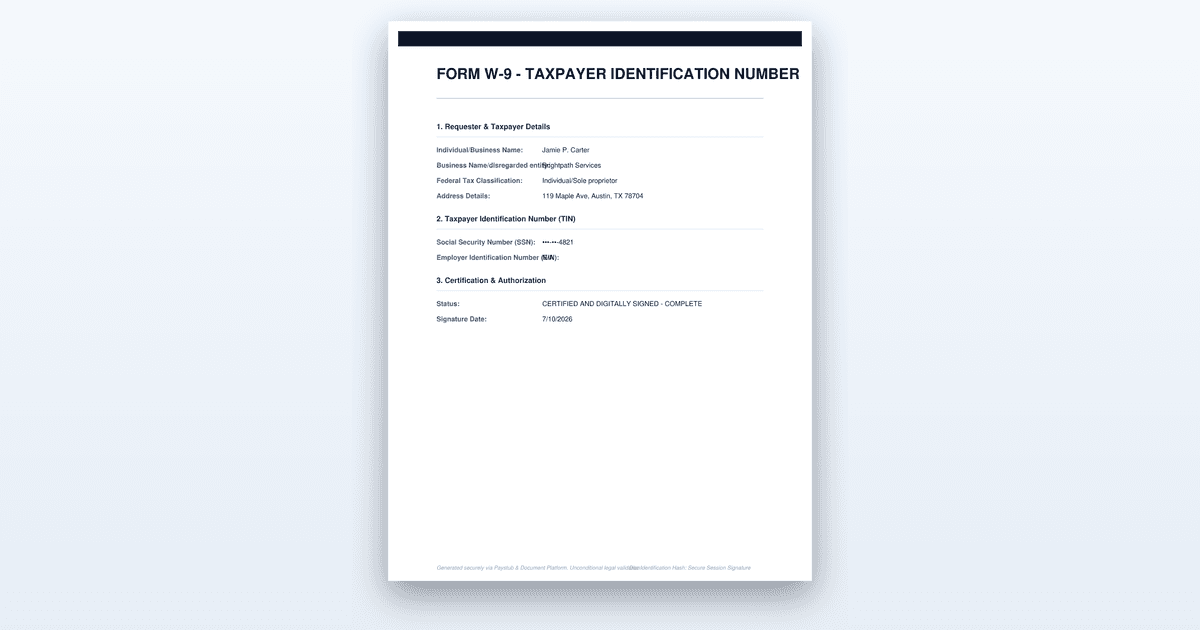
Before a company distributes any payments to a contractor, supplier, or remote professional, collecting an official Form W-9 is a vital compliance standard. This form records the payee's official Taxpayer Identification Number (TIN), Social Security Number (SSN), or Employer Identification Number (EIN).
Failing to record a valid W-9 prior to transaction approvals triggers automatic "backup withholding" requirements under IRS codes. Secure your corporate payment workflow immediately by sharing our clean, self-calculating W-9 Form Questionnaire with your service providers.
4. Customizing Employee Tax Withholdings via Form W-4
Whenever a new full-time or part-time staff member joins your organization, they must draft a completed Form W-4 to dictate their personal withholding allowances. The current structured W-4 template avoids confusing allowance numbers in favor of direct dollar amount accounting.
This form tells your bookkeeping department the precise tax bracket adjustments, standard deductions, and extra withholding margins to apply to the staff member's pay periods. Get your onboarding paperwork sorted smoothly with our state-aligned W-4 Form Creator.