
Florida Residential Lease Agreement Template (2026 PDF)
Paystub Generator Editorial Team
Last Updated: September 2, 2026
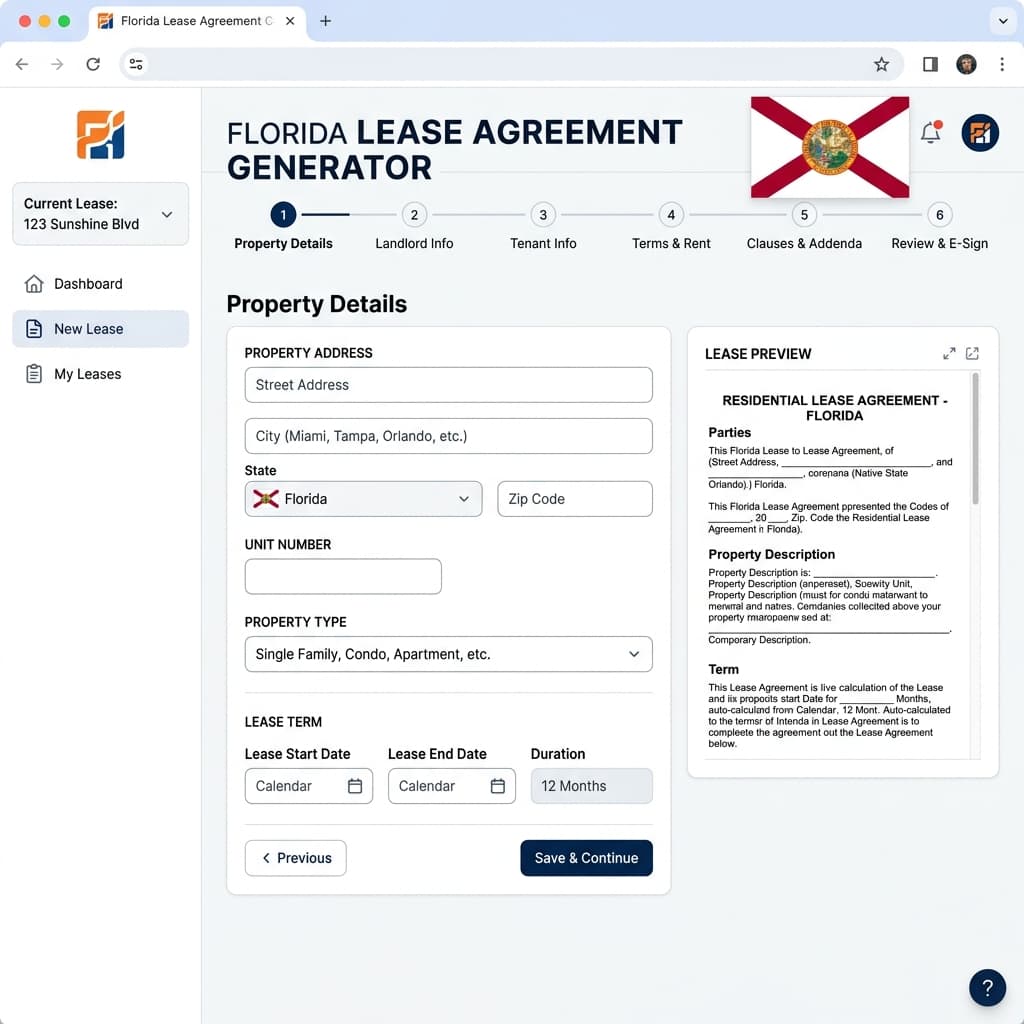
Create a compliant Florida residential lease agreement. Understand the radon disclosure, 2025 flood disclosure, 15/30-day deposit rules, and new email-notice law.
Florida Residential Lease Agreement
Renting out property in Florida means operating in one of the most active rental markets in the country. A carefully written Florida residential lease agreement is the document that keeps that activity profitable and dispute-free. It sets the rent, defines the term, and spells out exactly what each party owes the other under Chapter 83 of the Florida Statutes.
Florida does not cap rent at the state level, and it does not impose statewide rent control. That freedom makes the written lease even more important, because nearly every financial term you can negotiate lives or dies by what the contract actually says. A vague or incomplete agreement leaves you exposed when a tenant stops paying or damages the unit.
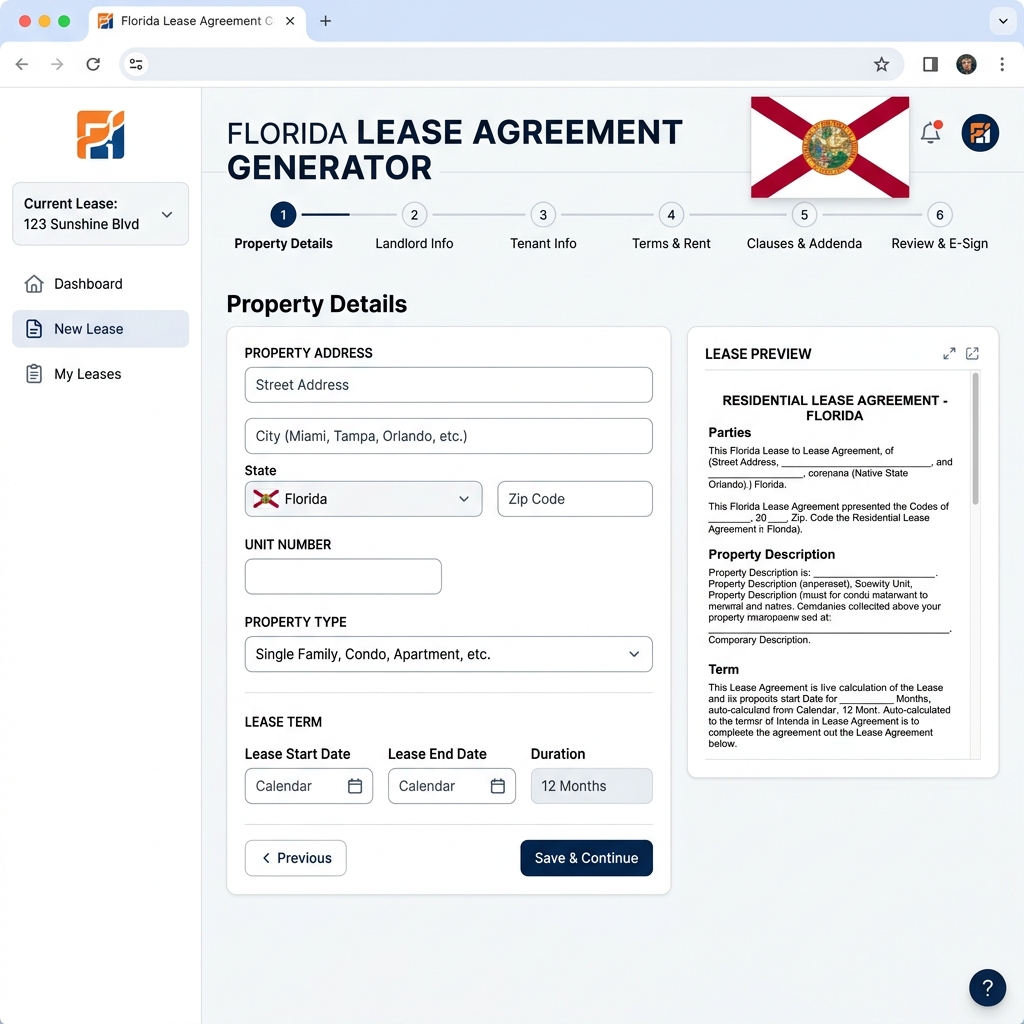
This guide walks through the clauses Florida landlords cannot afford to skip, the disclosures the state requires by statute, and the deposit and notice deadlines that trip up even experienced property owners. When you are ready to produce a finished document, our lease agreement generator builds a Florida-ready contract in minutes.
What a Florida Lease Agreement Must Contain
Every enforceable Florida lease starts with the basics: the legal names of all adult tenants, the full property address, the monthly rent amount, the due date, and the length of the term. Leaving any of these vague invites argument later.
Beyond identification, the agreement should state the accepted methods of payment and any late fee. Florida law does not set a maximum late fee, but courts will only enforce a fee that is reasonable and clearly disclosed in the signed lease. A surprise charge that never appeared in the contract is usually unrecoverable.
The lease should also address occupancy limits, guest policies, subletting rules, and maintenance responsibilities. Defining who handles lawn care, pest control, and minor repairs prevents the most common day-to-day friction between Florida landlords and tenants.
Term and Renewal
Most Florida landlords use a fixed-term lease, typically twelve months. The agreement should describe what happens at the end of that term, whether it converts to a month-to-month tenancy or requires a fresh signature.
For a month-to-month arrangement, Florida law requires at least 30 days' written notice to terminate from either party. That notice should align with the rental period so it ends cleanly on the last day of a month rather than mid-cycle.
Generate a Florida Lease Agreement
Our lease agreement generator produces a complete, state-aware Florida residential lease in minutes, with the required disclosures and clauses built in.
Create Florida Lease AgreementFlorida Security Deposit Rules
Florida sets no dollar limit on the security deposit a landlord can collect, but it imposes strict rules on how that money is held and returned. These deadlines are where most landlords lose deposit disputes.
When a tenant moves out and the landlord intends to make no deductions, the full deposit must be returned within 15 days. If the landlord plans to keep any portion, written notice of the claim must be sent within 30 days of move-out, itemizing exactly what is being withheld and why.
Once that 30-day notice goes out, the tenant has 15 days to object. If no objection arrives, the landlord may deduct the claimed amount and return the balance. Missing the notice deadline generally forfeits the right to keep any of the deposit, so calendar discipline matters.
Florida landlords must also disclose, within 30 days of receiving the deposit, whether the funds sit in an interest-bearing or non-interest-bearing account, and identify the institution holding them. When the tenancy ends, a clear security deposit return letter documents the refund or itemized deductions and protects you from later claims.
Deposit Alternatives
Recent Florida law allows landlords to offer a recurring fee in lieu of a traditional lump-sum deposit. If you offer this option, the terms must be disclosed in writing, and the fee amount cannot increase during the lease term.
This alternative can make a unit more attractive to cash-strapped applicants, but it is optional. Many landlords still prefer the certainty of a conventional refundable deposit backed by a thorough move-in inspection.
Mandatory Florida Disclosures
Florida requires specific disclosures that must appear in or accompany the residential lease. Omitting them can undermine your position in a dispute and, in some cases, expose you to liability.
The radon gas disclosure is unique to Florida. Statute 404.056(5) prescribes exact language that must appear in every residential lease, and it must be reproduced verbatim rather than paraphrased.
Properties built before 1978 require the federal lead-based paint disclosure, including the EPA pamphlet and any known hazard information. This is a federal rule, but it applies to Florida rentals just like everywhere else.
As of October 1, 2025, Florida added a flood disclosure requirement for residential leases of one year or longer. Landlords must disclose known prior flooding, past flood-damage insurance claims, and any flood-damage assistance received. Short-term and month-to-month leases are exempt from this particular rule.
The 2025 Email Notice Option
Starting July 1, 2025, Florida landlords and tenants may agree in writing to send and receive legally required notices by email. This must be set out in the lease or an addendum, and both parties have to consent.
If you want the speed and paper trail of email notices, build the consent language directly into your agreement from the start. Adding it later requires a signed addendum from the tenant.
Maintenance, Access, and Entry
Florida law obligates landlords to keep the dwelling in compliance with building, housing, and health codes, and to maintain structural elements, plumbing, and any provided appliances in working order. The lease should restate these duties so expectations are unmistakable.
For entry, Florida generally requires reasonable notice, often interpreted as at least 12 hours, before entering for repairs, and entry should occur at a reasonable time. Spelling out your notice practice in the lease reduces accusations of unlawful entry.
A detailed move-in inspection protects both sides. Documenting the unit's condition with a signed move-in checklist at the start, and a matching move-out checklist at the end, gives you objective evidence when deposit deductions are challenged.
Handling Late Rent and Lease Violations
When rent is late in Florida, the landlord must serve a 3-day notice to pay rent or vacate before pursuing eviction. The three days exclude weekends and legal holidays, a detail that landlords routinely miscount.
For lease violations that can be cured, such as an unauthorized pet, Florida uses a 7-day notice giving the tenant a chance to fix the problem. For violations that cannot be cured or that repeat, a 7-day unconditional notice to vacate may apply.
Sending a clear, dated late rent notice the moment rent is overdue starts the clock properly and preserves your right to escalate. Skipping or mishandling this step is the single most common reason Florida evictions get dismissed.
Ending the Tenancy Correctly
When a fixed-term Florida lease reaches its end, no special notice is required unless the lease itself demands it. The tenancy simply expires on the stated date, and the tenant is expected to vacate.
If either party wishes to end a month-to-month tenancy, the 30-day written notice rule applies. A formal lease termination letter creates a clean record of when notice was given and when the tenancy ends.
Screening the next applicant carefully prevents repeat problems. A complete rental application lets you verify income, rental history, and references before you hand over the keys, and an income check using a rental income verification document confirms the applicant can actually afford the rent.
Why a State-Specific Florida Lease Matters
A generic template downloaded from a national site will not include Florida's radon language, its 15/30-day deposit timeline, or the 2025 flood and email-notice provisions. Those gaps are exactly where landlords lose money in court.
A Florida-specific agreement bakes in the statutory deadlines and disclosures so you are not relying on memory or guesswork when a dispute arises. It turns a stack of legal requirements into a single signed document that a judge will actually enforce.
Treat the lease as the foundation of the entire landlord-tenant relationship. Every notice you serve, every deduction you make, and every eviction you file traces back to what the contract says, so it pays to get it right the first time.
Tenant Screening and Fair Housing in Florida
Choosing the right tenant is the most effective way to avoid disputes before they start. Florida landlords may screen for income, credit, and rental history, but every step must comply with the federal Fair Housing Act.
That means you cannot reject applicants based on race, color, national origin, religion, sex, familial status, or disability. Applying the same written criteria to every applicant is the simplest way to stay consistent and defensible.
Document your screening standards in advance and keep records of why each application was approved or denied. If a rejected applicant ever claims discrimination, that paper trail is your best defense, and a uniform rental application process makes it easy to maintain.
Handling Application Fees and Holding Deposits
Florida allows landlords to charge a non-refundable application fee to cover screening costs, provided it reflects the actual expense of running background checks. Disclose the fee amount before the applicant pays it.
A holding deposit is different from a security deposit and should be described separately in writing. State clearly whether it is refundable, how it applies to the first month's rent, and what happens if the applicant backs out before signing.
Common Mistakes Florida Landlords Make
The most expensive mistakes in Florida rentals usually involve missed deadlines rather than bad intentions. A landlord who returns a deposit on day 16 instead of day 15, or serves a deduction notice on day 31, can forfeit the entire claim.
Another frequent error is using an out-of-state or generic online template that omits Florida's radon language or the 2025 flood disclosure. Courts do not excuse missing statutory disclosures simply because the landlord used a form they found online.
Finally, many landlords fail to document the unit's condition at move-in, then struggle to justify deposit deductions at move-out. A signed, photographed inspection report removes the ambiguity and shifts the burden of proof in your favor.
Keeping Good Records Throughout the Tenancy
Treat every interaction as something you might one day need to prove. Save signed notices, dated photographs, payment records, and repair receipts in one organized place for each tenancy.
When it is time to verify whether a renewal applicant can still afford the unit, a current rental income verification gives you a documented basis for the decision. Good records turn a he-said-she-said dispute into a clear, evidence-backed case.
Build Your Florida Lease Agreement Today
You do not need an attorney on retainer to produce a compliant Florida lease. With the right tool, you can assemble a thorough, state-aware agreement that protects your property and your income in a single sitting.
Our lease agreement generator walks you through each clause, prompts you for the required Florida disclosures, and outputs a clean PDF ready for signature. Pair it with a signed [move-in checklist](/move-in-checklist
This guide is part of our Rental Documents service — lease agreements, rent receipts and notices.
Explore Rental DocumentsRental Forms Knowledge Hub
Explore our suite of legally reviewed templates in the Rental category.

