
California Residential Lease Agreement Template (2026 PDF)
Paystub Generator Editorial Team
Last Updated: September 2, 2026
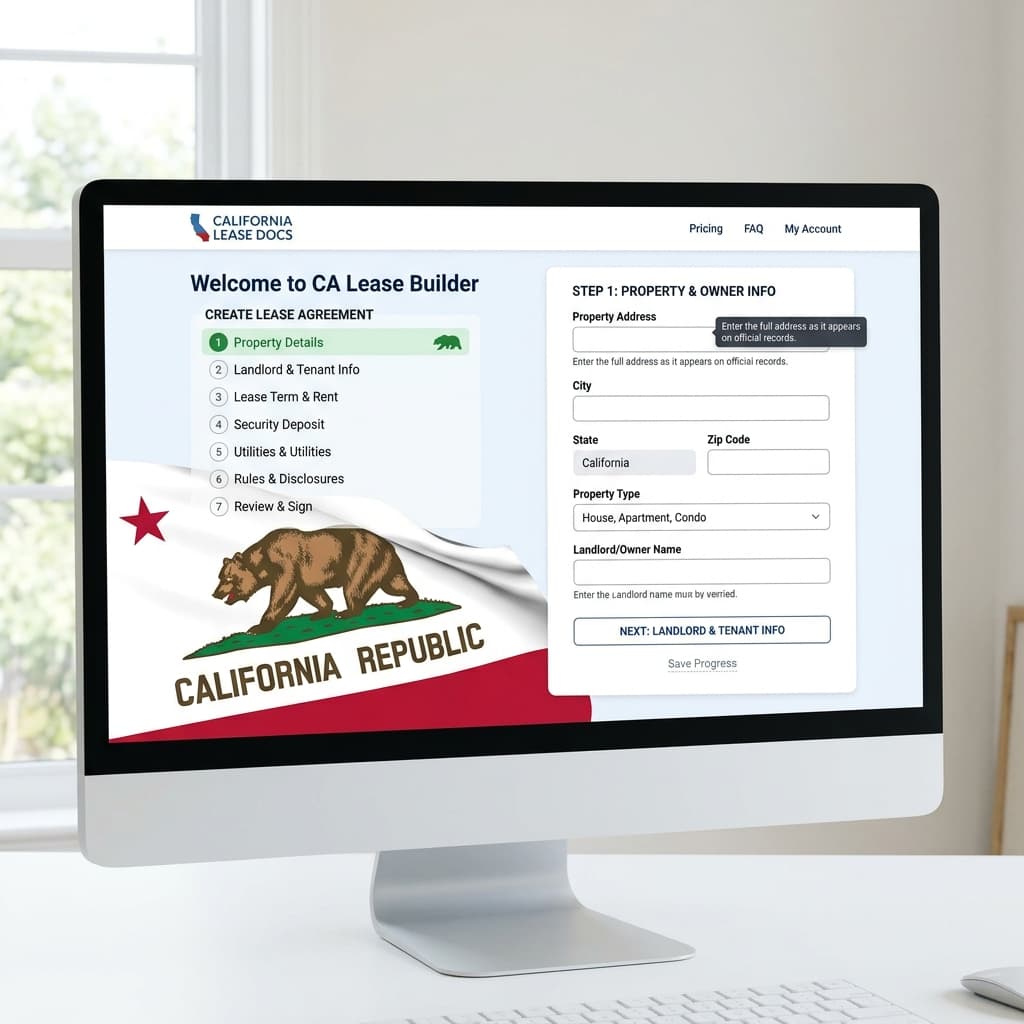
Generate a legally compliant California residential lease agreement. Learn about AB 1482, security deposit caps, and mandatory disclosures to protect your property.
Navigating the rental market in the Golden State requires strict adherence to tenant protection laws. A legally sound California residential lease agreement is your primary defense against costly legal disputes. This contract binds both the landlord and tenant, establishing clear expectations regarding rent, property maintenance, and occupancy rules.
California landlords face some of the most complex regulatory environments in the country. From rent control to mandatory safety disclosures, a generic lease template pulled from the internet simply won't cut it. Missing a single statutory clause can render eviction notices invalid and expose property owners to severe financial penalties.
Creating an airtight agreement ensures compliance with the latest housing regulations, including the Tenant Protection Act (AB 1482). It provides peace of mind, knowing your real estate investment is shielded by legally enforceable terms. Let’s explore the essential components every California rental contract must contain.
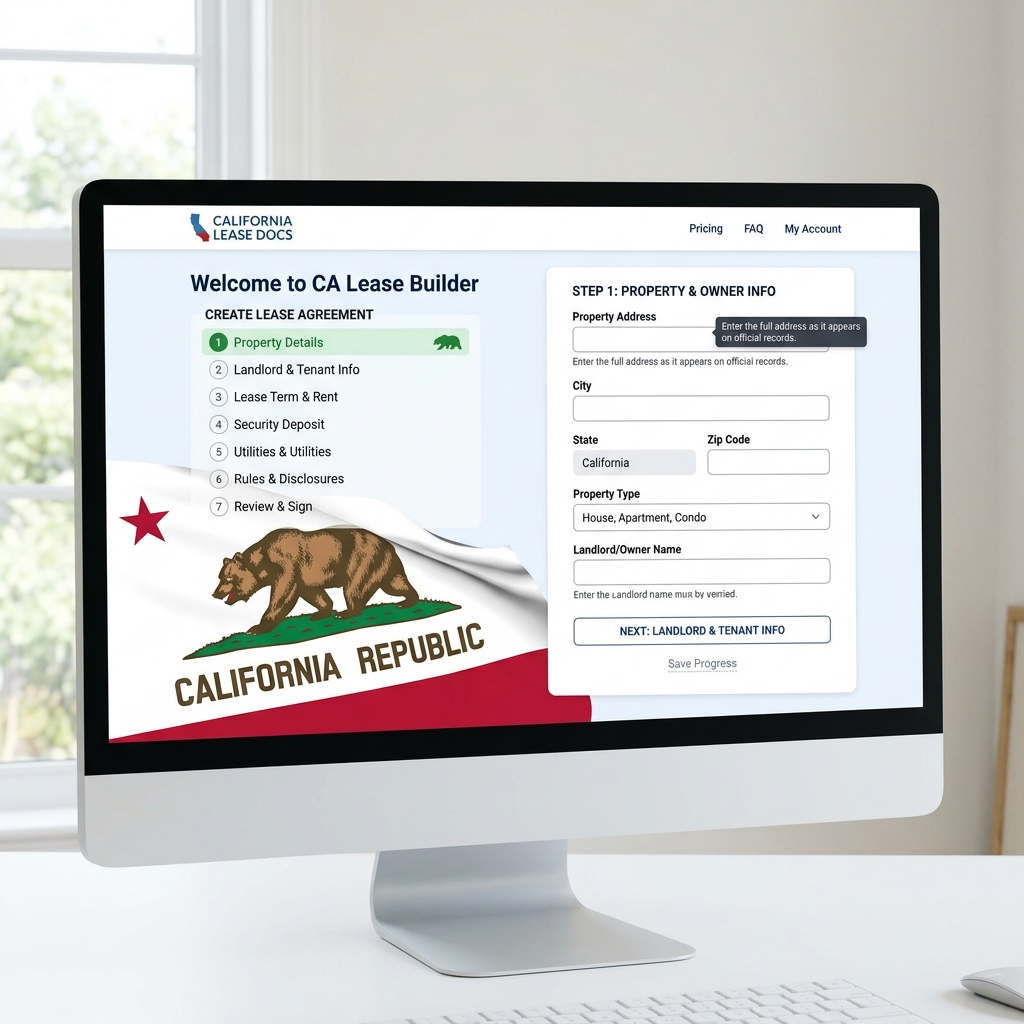
Understanding the California Residential Lease Agreement
A standard lease outlines the fundamental mechanics of the landlord-tenant relationship. In California, this extends far beyond simply stating the monthly rent amount and the duration of the tenancy. The agreement must explicitly define who is permitted to live on the premises, the rules regarding pets, and the allocation of utility payments.
Moreover, California law heavily scrutinizes vague or overly broad lease clauses. If a provision violates public policy or state statutes, courts will deem it unenforceable. This means landlords cannot legally waive their duty to maintain a habitable property, nor can they circumvent standard eviction protocols by adding an illegal waiver to the lease.
Accuracy in drafting is paramount. Small typographical errors or omitting the exact legal phrasing required by the Department of Real Estate can lead to prolonged disputes. Both parties should carefully review the document to ensure absolute clarity on all terms before signing.
Mandatory State-Specific Disclosures in California
California mandates a vast array of disclosures that must be attached to the lease agreement. Failing to provide these documents allows the tenant to cancel the lease without penalty or sue for damages. First and foremost, federal law requires a Lead-Based Paint Disclosure for any property constructed prior to 1978.
In addition to federal rules, California requires the "Megan’s Law" disclosure. This standard clause directs tenants to the Department of Justice’s database to check for registered sex offenders in the area. Landlords are not required to actively search the registry, but they must provide this specific statutory text in the lease.
Other critical disclosures include the Bed Bug Addendum, which outlines the tenant's responsibility to report infestations and the landlord's duty to treat them. Properties with known mold issues or those located in designated flood zones must also carry specific warnings. Furthermore, if a death occurred on the property within the prior 3 years, the landlord must disclose this fact to prospective tenants.
California Security Deposit Laws and Limitations
Handling security deposits is a major source of litigation in California. Recent legislation, specifically AB 12, fundamentally changed how much landlords can collect. As of mid-2024, landlords can only request a maximum of one month's rent as a security deposit for an unfurnished apartment.
This strict cap applies regardless of whether the property is furnished or unfurnished. There is a narrow exception for "small landlords" who own no more than two properties totaling no more than four units, allowing them to collect slightly more under specific circumstances. Landlords must keep these funds secure and avoid co-mingling them with personal accounts.
The return timeline is equally strict. Landlords have exactly 21 days after the tenant vacates to return the deposit. If deductions are made for cleaning or repairs beyond normal wear and tear, an itemized statement with receipts must be provided. Failing to meet this 21-day deadline forfeits the landlord's right to withhold any portion of the deposit.

Notice Periods and Eviction Regulations (AB 1482)
Evicting a tenant in California is a highly regulated process governed by strict notice periods. If a tenant fails to pay rent, the landlord must issue a 3-day Notice to Pay Rent or Quit. This notice must accurately state the exact amount owed and provide a valid location and method for payment.
For lease violations other than non-payment, such as unauthorized pets or subletting, a 3-day Notice to Cure or Quit is required. If the tenant rectifies the issue within three days, the eviction process halts. For ending month-to-month tenancies where the tenant has lived there for over a year, a 60-day notice is mandated.
Crucially, the Tenant Protection Act (AB 1482) requires "just cause" to evict tenants who have continuously occupied a unit for at least 12 months. Landlords cannot simply refuse to renew a lease without a legally valid reason, such as an owner move-in or a major remodel. If evicting for a "no-fault" just cause, the landlord must pay relocation assistance equal to one month's rent.
Landlord Entry Rights and Tenant Privacy
California fiercely protects a tenant's right to quiet enjoyment of their home. Landlords cannot enter the property unannounced for routine inspections or minor maintenance. State law mandates a minimum of 24 hours written notice before entering the premises.
This written notice must state the exact date, an approximate time, and the specific reason for entry. Acceptable reasons include making necessary repairs, exhibiting the unit to prospective buyers or tenants, or conducting a pre-move-out inspection. The entry must occur during normal business hours.
The only exception to the 24-hour notice rule is in the event of an absolute emergency, such as a burst pipe flooding the unit or a fire. In these life-or-property-threatening situations, the landlord may enter immediately without prior consent. Abuse of entry rights is considered harassment and can lead to severe legal repercussions.
Maintaining the Property: Landlord Responsibilities
Under the "implied warranty of habitability," California landlords must maintain rental units in a livable condition. This is not a waivable duty; you cannot force a tenant to accept an unsafe apartment in exchange for cheaper rent. Essential services like running water, heat, and electricity must be consistently functional.
The property must also be structurally sound, with weather-proofed roofs and windows. Plumbing and gas facilities must conform to applicable building codes. If a landlord fails to make critical repairs after being notified, tenants have several legal remedies.
One common tenant remedy is the "repair and deduct" method. If the issue severely affects habitability and costs less than one month's rent, the tenant can hire a professional, pay for the repair, and deduct the cost from their next rent payment. Tenants may also legally withhold rent entirely or break the lease if the landlord ignores severe habitability issues.
Late Fees and Grace Periods
Unlike some states, California does not mandate a statutory grace period for rent payments. If the lease states that rent is due on the first of the month, it is legally late on the second. However, many landlords voluntarily include a 3-to-5 day grace period in their agreements to maintain good tenant relations.
When it comes to late fees, California law restricts them to a "reasonable estimate" of the actual costs the landlord incurs due to the late payment. You cannot arbitrarily charge exorbitant flat fees or high percentages. A standard, legally defensible late fee typically hovers around 5% to 6% of the monthly rent.
Courts routinely strike down "punitive" late fees. It is vital to clearly outline the exact late fee amount and the conditions under which it triggers directly in the lease agreement. If it isn't explicitly written in the contract, you cannot legally collect it.
Subletting and Roommates in California
Subletting is a common point of contention. Most standard California leases require the landlord's explicit written consent before a tenant can sublease the unit or bring in long-term unauthorized roommates. This protects the landlord's right to screen everyone living on the property.
However, landlords must not unreasonably withhold consent if a tenant wishes to replace a roommate. If the proposed new roommate meets the standard financial and background check criteria, denying them could be viewed as a violation of the lease.
When a unit is sublet, the original tenant remains legally responsible for the entire rent amount and any damages caused by the subtenant. The landlord still collects rent from the original tenant, who in turn collects it from the subtenant. Clear language regarding unauthorized occupants prevents unauthorized Airbnb-style short-term rentals.
How to Ensure Your Lease is Legally Compliant
Drafting a lease from scratch or piecing together clauses from outdated internet forums exposes you to immense liability. California housing laws change almost annually, and an outdated clause can void your entire contract or cost you thousands in statutory penalties.
To guarantee complete compliance with all current state laws and local ordinances, Generate Your California Lease Agreement using our legally vetted, state-specific builder.
Our dynamic system automatically injects the exact statutory language, AB 1482 disclosures, and security deposit caps required by the California courts. You simply answer a few plain-English questions, and we assemble a professional, highly customized PDF ready for immediate digital signature.
Generate a California Lease Agreement
Protect your property with our legally vetted, state-specific builder.
Create Lease AgreementFrequently Asked Questions (FAQ)
What is the maximum security deposit allowed in California?
As of recent legislative changes, California landlords can generally only charge a maximum of one month's rent for a security deposit. This applies to both furnished and unfurnished units. There are narrow exceptions for very small landlords managing only a few units.
How much notice is required to increase rent in California?
For rent increases of 10% or less, landlords must provide a 30-day written notice. For increases exceeding 10%, a 90-day written notice is required. Keep in mind that AB 1482 places strict statewide caps on how much rent can be increased annually.
Is a grace period for rent legally required in California?
No, California law does not require landlords to offer a grace period. Rent is legally considered late the day after it is due according to the lease. However, many landlords choose to include a 3-to-5 day grace period as a standard business practice.
Can a tenant withhold rent for repairs in California?
Yes, under specific circumstances involving severe habitability issues. If a landlord ignores requests to fix critical problems like broken plumbing or no heat, tenants can use the 'repair and deduct' method or withhold rent. The issue must materially affect health and safety.
What are the rules for entering a tenant's apartment?
Landlords must provide a 24-hour written notice before entering a rental unit for non-emergencies. Entry is only permitted for specific reasons, such as repairs or showings, and must occur during normal business hours. Immediate entry is only allowed during genuine emergencies.
Does California require a written lease agreement?
A written lease is legally required for any tenancy that will last for more than one year. While month-to-month agreements can technically be verbal, it is highly recommended to have a written contract for every tenancy to clearly define rules and avoid disputes.
Can a landlord charge non-refundable pet fees in California?
No, California law prohibits non-refundable security deposits, including non-refundable pet fees. Landlords can charge a higher overall security deposit to cover potential pet damage, but it must still adhere to the strict state caps and be refundable.
What is AB 1482 and how does it affect leases?
AB 1482 is the California Tenant Protection Act, which implemented statewide rent control and just-cause eviction requirements. Landlords must include specific statutory language in their lease agreements detailing whether the property is exempt from or subject to these rules.
How long does a landlord have to return a security deposit?
California landlords have exactly 21 days from the date the tenant moves out to return the security deposit. If any deductions are made, the landlord must provide an itemized statement and receipts showing the cost of the repairs or cleaning.
Are electronic signatures valid on a California lease?
Yes, under both federal and state law, electronic signatures carry the exact
This guide is part of our Rental Documents service — lease agreements, rent receipts and notices.
Explore Rental DocumentsRental Forms Knowledge Hub
Explore our suite of legally reviewed templates in the Rental category.

