
Texas Residential Lease Agreement Template (2026 PDF)
Paystub Generator Editorial Team
Last Updated: September 2, 2026
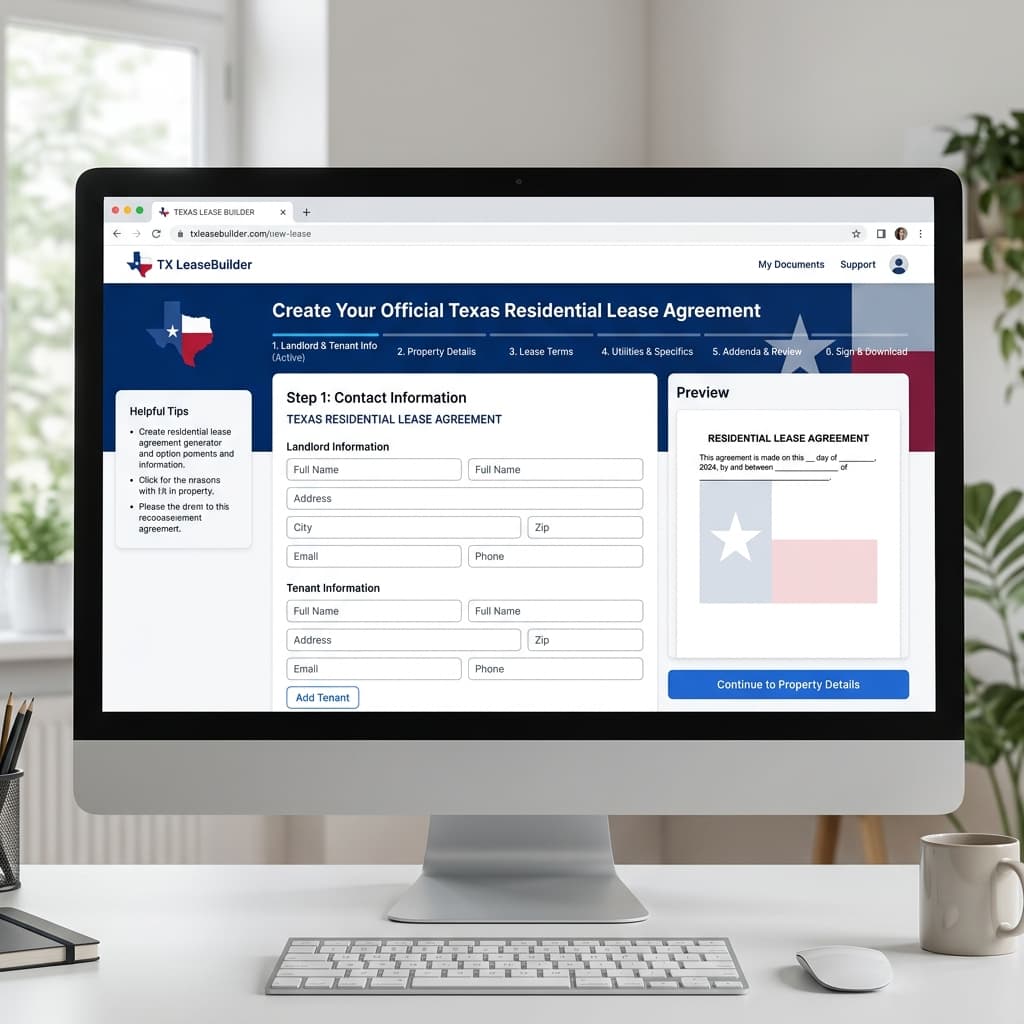
Build a compliant Texas residential lease agreement. Learn the 30-day deposit return rule, Section 92.109 penalties, required security devices, and notice to vacate.
Texas Residential Lease Agreement
Texas is one of the most landlord-friendly states in the country, but that reputation comes with strict procedural rules that property owners must follow precisely. A well-drafted Texas residential lease agreement is what lets you take advantage of those favorable laws without tripping over the deadlines built into Chapter 92 of the Texas Property Code.
Texas imposes no statewide rent control and no cap on security deposits, leaving most financial terms to the contract itself. That flexibility rewards landlords who write thorough leases and punishes those who rely on vague, generic forms.
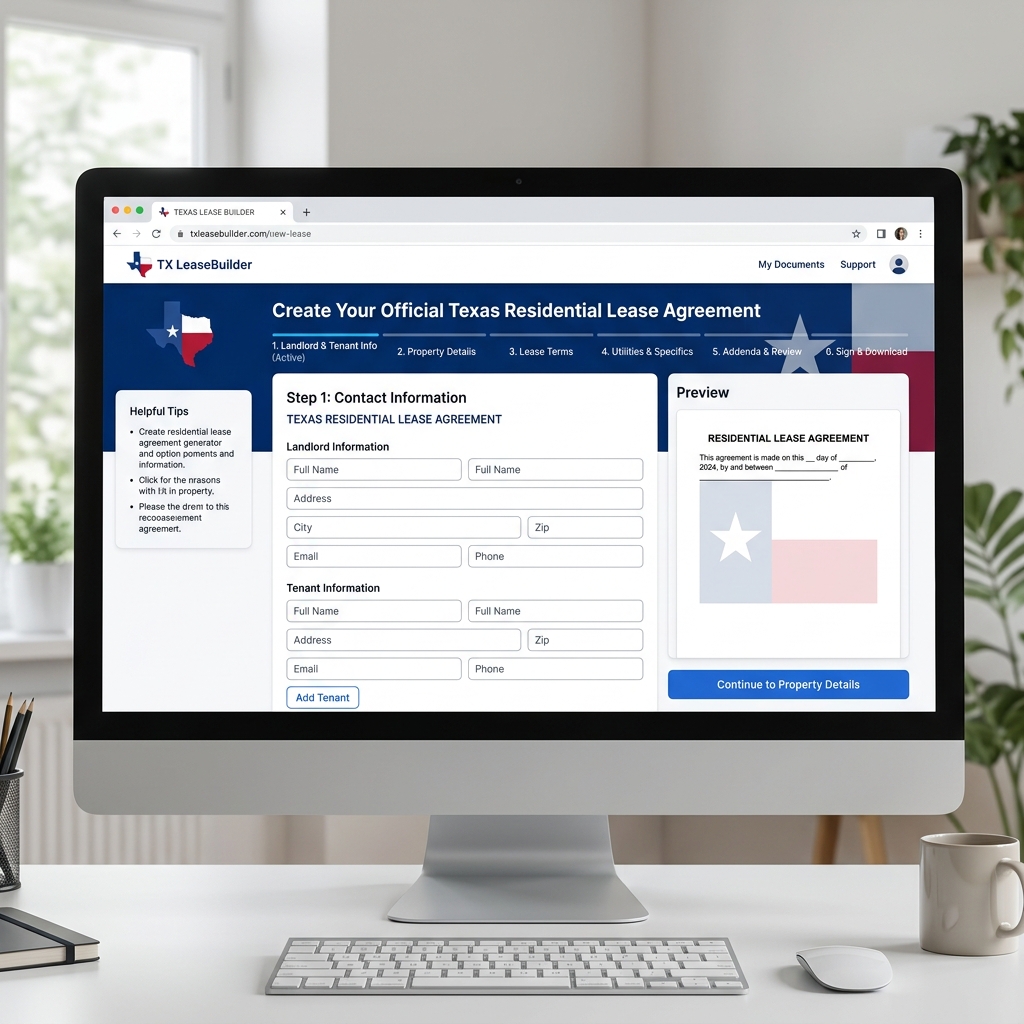
This guide covers the clauses every Texas lease needs, the security-device requirements unique to the state, the 30-day deposit return rule, and the notice periods that govern late rent and move-out. When you are ready to assemble the document, our lease agreement generator produces a Texas-ready contract you can sign the same day.
Core Elements of a Texas Lease
A binding Texas lease names every adult tenant, identifies the property, and states the rent, due date, and term in plain language. These fundamentals anchor every other right and obligation in the agreement.
The lease should specify accepted payment methods and the late fee structure. Texas allows late fees that are a reasonable estimate of the landlord's costs, and recent law generally treats fees within certain percentage ranges of monthly rent as presumptively reasonable when disclosed in the written lease.
Occupancy limits, pet policies, subletting rules, and maintenance duties round out the core terms. Defining each item upfront removes the ambiguity that fuels most landlord-tenant conflict in Texas.
Term and Holdover
Texas landlords typically use a fixed twelve-month term. The lease should describe what happens at expiration, whether the tenancy ends, renews, or shifts to month-to-month.
For a month-to-month tenancy, Texas requires at least 30 days' written notice to terminate from either party unless the lease specifies a different period. A holdover tenant who stays past the term without permission can be removed through the eviction process after proper notice.
Generate a Texas Lease Agreement
Our lease agreement generator produces a complete, state-aware Texas residential lease in minutes, with the required disclosures and clauses built in.
Create Texas Lease AgreementTexas Security Deposit Rules
Texas does not limit the size of a security deposit, but Section 92.103 requires the landlord to return it within 30 days after the tenant surrenders the property and provides a forwarding address. This 30-day clock is the deadline most Texas landlords need to memorize.
If the landlord withholds any portion, an itemized written list of deductions must accompany the refund. Deductions cannot cover normal wear and tear, only actual damage beyond ordinary use.
Section 92.109 gives the rule real teeth. A landlord who acts in bad faith by failing to return the deposit or provide the itemized list within 30 days can be liable for $100, three times the wrongfully withheld portion, and the tenant's attorney's fees. A clean security deposit return letter sent on time is the simplest way to avoid that exposure.
Forwarding Address Requirement
The 30-day deadline does not begin until the tenant provides a forwarding address in writing. Landlords should request that address at move-out and document when it was received.
If a tenant never supplies a forwarding address, the landlord's obligation to return the deposit is suspended, though keeping the deposit without justification is still risky. The cleanest practice is to ask for the address in writing and keep the response on file.
Required Security Devices and Disclosures
Texas law is unusually specific about physical security. Landlords must install and pay for certain security devices, and tenants cannot waive these protections by contract.
Required devices generally include keyed dead bolts on exterior doors, sliding door pin locks or security bars, door viewers, and window latches. Smoke detectors are also mandatory, and tenants may not disconnect or disable them.
Texas landlords must disclose the name and address of the property owner or manager so tenants know who is legally responsible. Properties built before 1978 also require the federal lead-based paint disclosure, including the EPA information pamphlet.
Parking, Rules, and Addenda
Any community rules, parking assignments, or pet agreements should be attached as written addenda and referenced in the lease. A rule that lives only in the landlord's head is nearly impossible to enforce.
Attaching addenda also keeps the main lease readable while still binding the tenant to detailed policies. Each addendum should be signed and dated alongside the lease itself.
Late Rent and the Notice to Vacate
When a Texas tenant fails to pay, the landlord must deliver a notice to vacate before filing an eviction suit. For nonpayment, the statutory minimum is generally 3 days unless the lease specifies a shorter or longer period.
The notice to vacate is a strict prerequisite. An eviction filed without proper notice will usually be dismissed, forcing the landlord to start over and lose weeks of potential rent.
Serving a dated late rent notice the moment rent is overdue creates the record you need and signals the tenant that you intend to enforce the lease. For lease violations beyond nonpayment, review the specific notice period your lease and the Property Code require before acting.
Maintenance and Repair Duties
Texas requires landlords to make a diligent effort to repair conditions that materially affect the physical health or safety of an ordinary tenant. The tenant must usually provide notice and be current on rent to trigger the landlord's repair duty.
The lease should describe how tenants report repair requests and how quickly the landlord will respond. Clear procedures reduce the chance that a tenant invokes Texas's repair-and-deduct or lease-termination remedies.
A thorough move-in inspection protects both sides. A signed move-in checklist documents the unit's starting condition, and a matching move-out checklist gives you objective grounds for any deposit deductions.
Screening Tenants the Right Way
Texas landlords have wide latitude to screen applicants, but every decision must comply with the federal Fair Housing Act. You may evaluate income, credit, and rental history, but not protected characteristics.
Applying identical written criteria to every applicant keeps your process consistent and defensible. A uniform rental application collects the same information from everyone and creates the paper trail you would need if a denial were ever challenged.
Verifying income is especially important in a no-rent-control state where you cannot easily raise rent mid-term to offset a risky tenant. A documented rental income verification confirms the applicant can comfortably afford the unit before you commit.
Ending a Texas Tenancy
A fixed-term Texas lease ends on its stated date without special notice unless the lease requires it. The tenant is expected to return possession and provide a forwarding address for the deposit.
For month-to-month tenancies, the 30-day notice rule governs, and a written lease termination letter documents exactly when notice was given. Clear records here prevent disputes about whether the tenant left on time.
Why a Texas-Specific Lease Is Worth It
A national template will not include Texas's mandatory security-device list, the Section 92.109 deposit penalties, or the forwarding-address trigger for the 30-day clock. Those omissions are precisely where landlords lose money.
A Texas-specific agreement bakes the Property Code's deadlines and requirements directly into the contract, so you are not relying on memory when a dispute arises. It converts a long list of statutory duties into one enforceable document.
In a landlord-friendly state, the contract is your leverage. Write it thoroughly, follow the deadlines, and Texas law will generally work in your favor.
Understanding Texas Eviction Procedure
Even in a landlord-friendly state, eviction in Texas is a court process that cannot be shortcut. Self-help measures such as changing the locks, shutting off utilities, or removing a tenant's belongings are illegal and expose the landlord to damages.
The proper sequence starts with a written notice to vacate, followed by filing a forcible detainer suit in the justice court if the tenant does not leave. Only a constable or sheriff acting on a court order may physically remove a tenant.
Because the process is procedural, small errors cause big delays. Serving the correct notice, waiting the full notice period, and filing in the right precinct all matter, which is why a clean late rent notice at the start saves time later.
Lockouts and Utility Interruptions
Texas does permit a landlord to change locks in narrow circumstances for nonpayment, but only if the lease authorizes it and the tenant is given a way to obtain a new key. The rules are technical and easy to violate.
Interrupting utilities to force a tenant out is generally prohibited and can trigger statutory penalties. When in doubt, the safe path is always the formal court eviction rather than any form of self-help.
Lease Renewals and Rent Increases
Because Texas has no rent control, landlords may raise rent as much as the market allows when a fixed term ends. The key is timing the increase to coincide with renewal rather than attempting it mid-term.
The lease should state how renewal works and how much notice each party must give. Communicating a rent change in writing well before the term expires gives the tenant time to decide and reduces the chance of a sudden vacancy.
Before renewing, confirm the tenant still meets your standards. A fresh rental income verification at renewal time documents that the tenant can still afford the unit at the new rate, protecting you from approving a renewal the tenant cannot sustain.
Documenting Every Change
Any change to rent, term, or policies should be captured in a signed amendment or a new lease. Verbal agreements about rent increases are nearly impossible to enforce in a Texas courtroom.
Keep each signed document with the rest of the tenancy file. A well-organized record of every amendment makes renewals smooth and disputes rare.
Build Your Texas Lease Agreement Today
You can produce a compliant Texas lease without hiring an attorney for every tenancy. The right tool prompts you for the security devices, disclosures, and deposit terms the state requires.
Our lease agreement generator walks through each clause and outputs a clean, signature-ready PDF tailored to Texas. Pair it with a documented [move-in checklist](/move-in-
This guide is part of our Rental Documents service — lease agreements, rent receipts and notices.
Explore Rental DocumentsRental Forms Knowledge Hub
Explore our suite of legally reviewed templates in the Rental category.

