
Plumbing Invoice Template & Generator
Paystub Generator Editorial Team
Last Updated: September 2, 2026
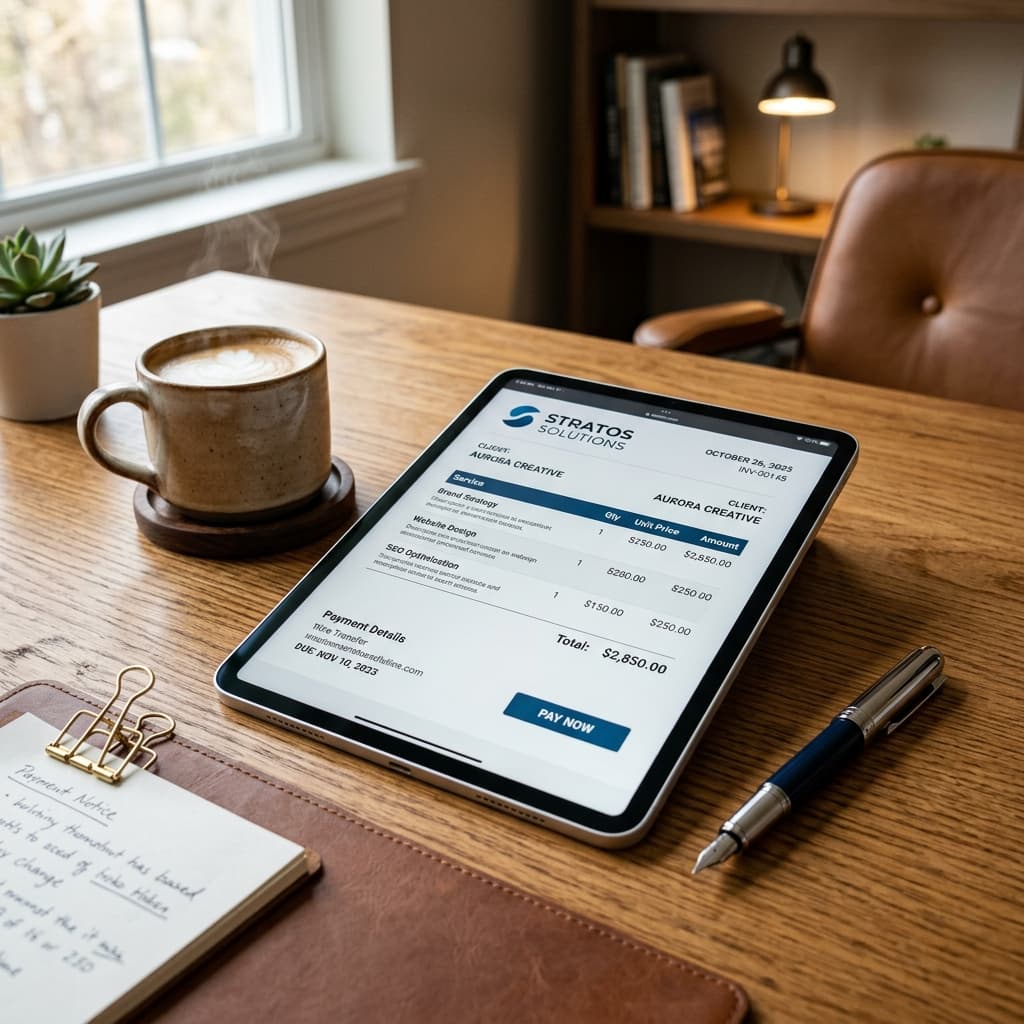
Create professional plumbing invoices instantly. Add your logo, calculate taxes, and download. Learn the essentials of billing for plumbing services.
Running a successful plumbing business requires much more than just fixing leaks and unclogging drains. It demands strict attention to administrative details, the most critical of which is your billing process. A highly professional, detailed plumbing invoice is the lifeblood of your cash flow.
It ensures you get paid for your hard work promptly and accurately.
Without a standardized invoicing process, plumbers often face delayed payments, disputes with clients over materials versus labor, and major headaches during tax season. This comprehensive guide will walk you through everything you need to know about crafting the perfect plumbing invoice, from essential components to legal considerations and best practices for following up on late payments.
Generate a Plumbing Invoice Instantly
Stop wrestling with messy spreadsheets. Create a professional, itemized plumbing invoice securely and with absolute ease. Download your perfectly formatted PDF in minutes.
Create Your Invoice NowWhy Your Plumbing Invoice Matters
An invoice is far more than a simple request for payment. It is a legally binding document that serves multiple critical functions for your plumbing business. First and foremost, it establishes a clear, written record of the services rendered and the materials used.
This transparency is crucial for building trust with your clients. When a homeowner or property manager can see exactly what they are paying for, they are much less likely to dispute the final total.
Furthermore, a well-designed invoice acts as a powerful branding tool. Every piece of documentation you hand to a client reflects the professionalism of your company. A clean, branded invoice featuring your company logo and clear contact information reinforces the idea that you run a legitimate, high-quality operation.
It leaves a lasting positive impression, which is essential for generating repeat business and valuable word-of-mouth referrals.
Finally, accurate invoices are the foundation of your business accounting. Come tax season, you will need a flawless paper trail of your income and the costs of goods sold (materials). Relying on scribbled notes on the back of a business card is a guaranteed recipe for an IRS audit disaster.
The Anatomy of a Perfect Plumbing Invoice
To be effective, professional, and legally compliant, your plumbing invoice must include several specific pieces of information. Leaving any of these elements out can result in payment delays or accounting errors.
1. Professional Header and Branding
The top of your invoice should immediately identify your business. It must include your official business name, a high-quality logo (if you have one), your physical business address, your phone number, and your professional email address. If your state or municipality requires you to list your plumbing contractor license number on all official correspondence, this is the perfect place to put it.
2. Client Contact Information
Directly below or beside your business information, clearly list the client's details. This includes their full name (or the name of their property management company), the address where the service was performed, and their billing address if it differs from the service location. Include their phone number and email address for easy follow-up.
3. Unique Invoice Number
Every single invoice you generate must have a unique, sequential invoice number. This is absolutely critical for accounting purposes.
If a client calls with a question about a bill, the invoice number allows you to pull up the exact document instantly. It also ensures you don't accidentally double-bill a client or miss a payment entirely.
4. Important Dates
Your invoice must include two critical dates: the Date of Issue (the day you generate and send the invoice) and the Payment Due Date. The due date should be explicitly clear (e.g., "Due on Receipt," "Net 15," or "Net 30"). Vague payment terms lead to late payments.
5. Itemized Breakdown of Labor
Plumbing work is notoriously labor-intensive. Your clients need to see exactly how much time you spent on their project and what your hourly rate is. Instead of writing "Fixed a leak," be specific.
Write "Diagnostic of master bathroom shower leak (1 hour at $95/hr)" followed by "Repair and replacement of shower valve cartridge (2 hours at $95/hr)." This level of detail eliminates ambiguity and justifies your final price.
6. Itemized Breakdown of Materials
Just as you itemize your labor, you must meticulously itemize the materials used. Clients are often shocked by the cost of specialized plumbing parts.
By listing each item individually (e.g., "1/2 inch copper pipe - 10 feet," "Moen shower valve cartridge," "PVC primer and cement"), you provide total transparency. This is also where you add your standard markup on materials to cover your sourcing and transportation time.
7. Clear Subtotals, Taxes, and Grand Total
After listing all labor and materials, provide a clear subtotal. Below the subtotal, add any applicable state or local sales taxes.
Plumbing services are taxed differently depending on your state; some states tax both materials and labor, while others only tax materials. Ensure you are applying the correct tax laws for your jurisdiction. Finally, present the Grand Total in a large, bold font so it cannot be missed.
8. Accepted Payment Methods
Make it as easy as possible for your client to pay you. List all acceptable payment methods at the bottom of the invoice.
If you accept checks, specify who they should be made out to and where they should be mailed. If you accept credit cards, provide a secure payment link or instructions on how to call your office to process the payment. If you use digital payment platforms like Zelle or Venmo, list your handles clearly.
9. Terms, Conditions, and Late Fees
Protect your business by clearly stating your late fee policy directly on the invoice. For example, "A late fee of 1.5% per month will be applied to all balances strictly past 30 days." You can also use this section to detail your warranty information on parts and labor, providing peace of mind to your client.
Common Invoicing Mistakes Plumbers Make
Even experienced plumbers fall into bad invoicing habits that cost them time and money. Here are the most common pitfalls to avoid:
Vague Descriptions: Writing "Plumbing repair - $450" is unacceptable. It practically invites the client to call and argue about the price. Always break down exactly what was repaired, how long it took, and what parts were replaced.
Surprise Charges: An invoice should never be a surprise. If you run into unexpected complications during a job that will significantly increase the cost, you must communicate this to the client before doing the work. Get their approval for the revised estimate, so the final invoice matches their expectations.
Waiting Too Long to Send: The longer you wait to send an invoice, the longer you wait to get paid. Best practice is to generate and send the invoice the moment the job is completed, ideally while you are still standing in the client's driveway.
Forgetting to Follow Up: Sending an invoice is only the first step. If the due date passes without payment, you must have a system for following up. Send a polite reminder email a few days after the due date, followed by a phone call a week later.
The Transition from Paper to Digital Invoicing
For decades, the standard for plumbers was the classic carbon-copy invoice pad kept on the dashboard of the service van. While these physical pads are nostalgic, they are severely outdated and actively harm your business efficiency.
Handwritten invoices are frequently illegible, leading to disputes over the final amount. They are incredibly easy to lose, meaning you might completely forget to bill for a completed job. Furthermore, when it comes time to do your accounting, you have to manually enter every single paper invoice into your computer system, doubling your administrative workload and introducing massive opportunities for data entry errors.
Digital invoicing solves all of these problems instantly. By using an online invoice generator, you can type your itemized lists clearly, calculate taxes automatically without doing math in your head, and instantly email a professional PDF directly to the client before you even leave their property. Digital invoices are automatically stored securely in the cloud, meaning you never lose a record and your accountant will thank you at the end of the year.
Handling Emergency Service Fees
Plumbing emergencies don't stick to a 9-to-5 schedule. When a pipe bursts at 2:00 AM on a Sunday, you are providing a premium, highly disruptive service. It is standard industry practice to charge an emergency call-out fee or an elevated hourly rate for after-hours work.
When invoicing for emergency services, transparency is vital. The emergency fee should be listed as a distinct, separate line item at the very top of the itemized list. Do not simply hide the emergency premium by silently inflating your hourly labor rate.
Clearly labeling it as an "After-Hours Dispatch Fee" or "Weekend Emergency Rate" clarifies exactly why the bill is higher than a standard Tuesday afternoon appointment. Ensure you communicate this emergency fee structure to the client over the phone before you even dispatch your truck, so there is no "sticker shock" when they see the invoice.
Dealing with Commercial Clients vs. Residential Clients
Your invoicing approach will often need to shift depending on whether you are servicing a residential homeowner or a large commercial property.
Residential clients typically expect to pay upon completion of the job. You hand them the invoice, and they write you a check or hand you a credit card on the spot. Your payment terms for residential jobs should generally be "Due on Receipt."
Commercial clients, however, operate differently. Large property management firms, restaurants, and retail stores usually have dedicated accounts payable departments. They will not pay you on the spot.
Instead, you will submit your invoice, and they will process it according to their corporate payment cycles. It is standard to offer "Net 30" payment terms (meaning they have 30 days to pay the invoice) for commercial clients. Ensure your cash flow can handle these delayed payment cycles before taking on massive commercial contracts.
The Importance of Estimates and Quotes
An invoice is a demand for payment after work is completed. However, a smooth invoicing process actually begins before the work starts, with a highly accurate estimate or quote.
When you provide a detailed, written estimate outlining the projected labor and materials, you set clear financial expectations with the client. If they sign off on the estimate, your final invoice should mirror that estimate as closely as possible. If the final invoice perfectly aligns with the initial quote, the client has no grounds to dispute the charges, and you will get paid much faster.
Advanced FAQ: Plumbing Invoicing
Should I charge for travel time? This is a highly debated topic in the plumbing industry. Some plumbers charge a flat "Dispatch Fee" or "Trip Charge" just to show up at the house, which covers their fuel and travel time. Others simply absorb travel costs into a slightly higher hourly labor rate.
Whichever method you choose, be consistent and clearly list it on your invoice. If you charge a separate dispatch fee, make it the very first line item.
How do I handle deposits for large jobs? For massive projects like complete repiping or major sewer line excavations, it is standard practice to require a deposit upfront to cover the massive initial material costs. This is typically 30% to 50% of the total estimated job cost.
When you generate the final invoice, you will list the total cost of the job, and then clearly subtract the "Deposit Already Paid" to show the final remaining balance due.
What do I do if a client simply refuses to pay? Unfortunately, dealing with non-paying clients is part of running a service business. If your polite reminder emails and phone calls are ignored, you have several options. The first is to send a formal Demand Letter, which acts as a final warning.
If that fails, your most powerful tool is filing a Mechanic's Lien against their property. A Mechanic's Lien clouds the title of the property, preventing the owner from selling or refinancing the home until your plumbing debt is paid in full. Consult with a local attorney to understand the specific lien laws and timelines in your state.
Stop Chasing Payments
Professional documents demand professional respect. Use our Invoice Maker to generate pristine, flawless bills that get paid on time, every time. Create your document securely and with absolute ease.
Launch Invoice GeneratorKnowledge Hub
Explore our other professional business tools and forms to streamline your operations:
- Business Forms Hub
- Invoice Maker
- Receipt Generator
- Quote Estimator
- [Employment Verification Letter](https://www
This guide is part of our Business Forms service — invoices, quotes, estimates and receipts.
Explore Business FormsBusiness Forms Knowledge Hub
Explore our suite of professional templates in the Business category.

