
Comprehensive Guide to Creating a Durable Power of Attorney
Paystub Generator Editorial Team
Last Updated: September 2, 2026
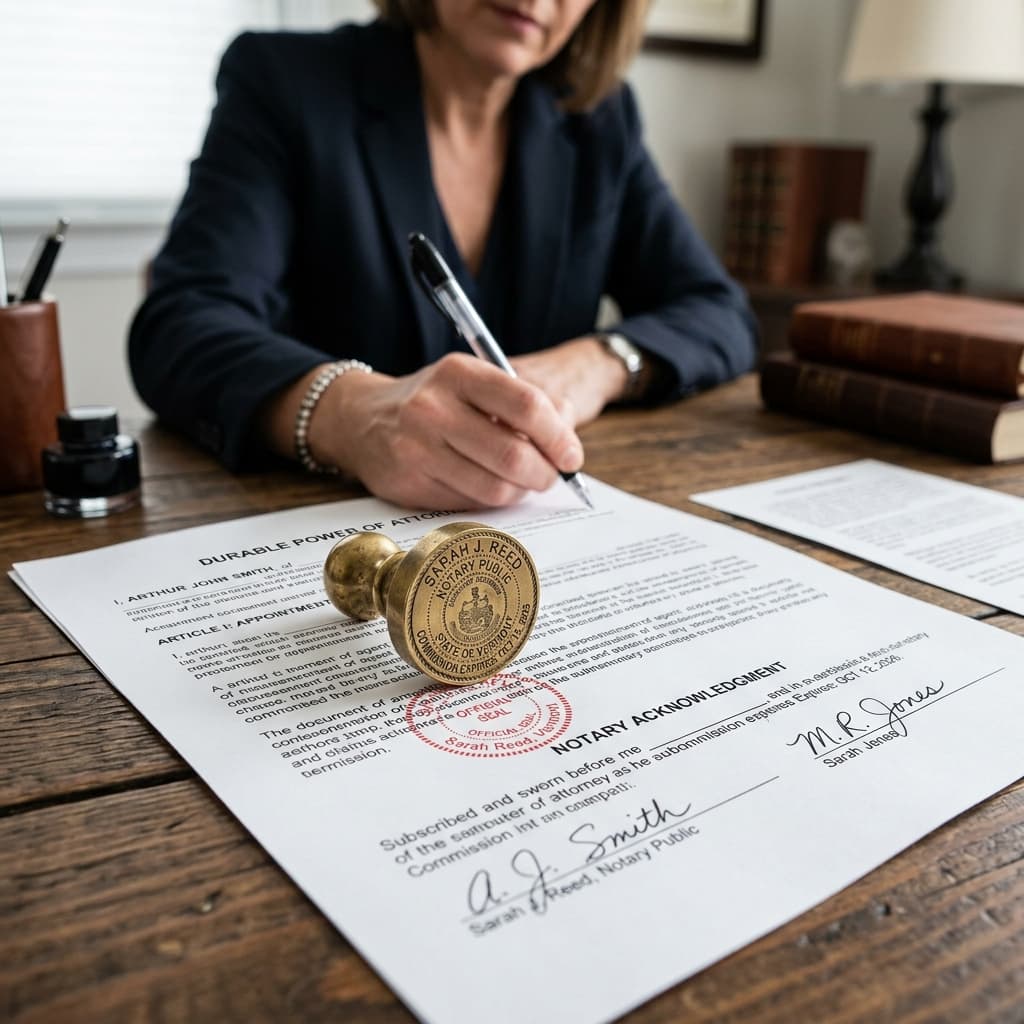
Everything you need to know about setting up a Durable Power of Attorney to protect your financial and legal interests if you become incapacitated.
Life is inherently unpredictable, and planning for unforeseen medical or cognitive decline is a critical responsibility. A Durable Power of Attorney (DPOA) is one of the most powerful legal instruments available to protect your financial well-being. Without this document, your family could be left paralyzed, unable to access funds or manage your affairs during a crisis.
Understanding how a DPOA functions can mean the difference between a smooth transition of authority and a chaotic legal nightmare. This comprehensive guide will walk you through everything you need to know about establishing a DPOA. From selecting the right agent to understanding the scope of their powers, we will cover every crucial detail.
What is a Durable Power of Attorney?
A Power of Attorney is a legal document where one person grants another person the authority to act on their behalf. The person granting the authority is known as the "principal." The person receiving the authority is called the "agent" or "attorney-in-fact," though they do not need to be an actual lawyer.
The word "durable" is what makes this specific document so incredibly important. A standard, non-durable Power of Attorney automatically terminates if the principal becomes mentally incapacitated. However, a Durable Power of Attorney remains fully valid and in effect even if the principal falls into a coma or develops severe dementia.
This continuous legal authority is precisely why a DPOA is a cornerstone of any robust estate plan. It ensures that someone you trust implicitly can seamlessly take over your financial responsibilities when you are physically or mentally unable to do so yourself. Without the durable designation, the document is virtually useless in a medical emergency.
Why You Need a Durable Power of Attorney
Many people incorrectly assume that their spouse or adult children automatically have the legal right to manage their finances if they become incapacitated. This is a massive and often costly misconception. Banks, financial institutions, and government agencies will absolutely not let anyone access your solely owned accounts without proper legal authorization.
If you become incapacitated without a DPOA, your family will be forced to go to court to establish a conservatorship or adult guardianship. This legal process is notoriously slow, incredibly expensive, and deeply invasive to your privacy. Establishing a conservatorship can easily cost between $3,000 and $10,000 in legal and court fees.
During the months it takes the court to appoint a conservator, your bills may go unpaid, and your assets could be mismanaged or lost. A DPOA completely bypasses this burdensome court process. It allows your trusted agent to step in immediately and keep your life running smoothly while you focus on recovery or care.
State Law Disclaimers and Requirements
It is critical to understand that the laws governing a Durable Power of Attorney vary significantly from state to state. What constitutes a valid document in California might be entirely rejected by financial institutions in New York. Disclaimer: This article provides general educational information and does not constitute legal advice.
You should consult your state's specific laws or a qualified attorney to ensure compliance.
For example, the specific language required to make the document "durable" is often dictated by state statutes. Furthermore, execution requirements regarding signatures, witnesses, and notarization differ widely. While most states require a DPOA to be notarized, some states, like Pennsylvania, also require the signatures of two independent witnesses.
Financial institutions are famously strict about DPOA compliance to protect themselves from liability and fraud. If your document is missing a specific state-mandated clause, the bank's legal department will likely reject it. Using state-specific forms or consulting a local professional is the only way to ensure your document will be honored when it is needed most.
Generate a Durable Power of Attorney
Our Durable Power of Attorney generator produces a complete, printable document customized to your state's specific legal requirements. Protect your financial future today.
Create Durable Power of AttorneyChoosing the Right Agent
Selecting the right agent is undoubtedly the most critical decision you will make when drafting this document. Your agent will have immense power over your finances, potentially accessing your bank accounts, selling your real estate, and managing your investments. Therefore, absolute trust and unwavering integrity are non-negotiable prerequisites for the role.
Your agent does not need to be a financial expert or hold an accounting degree. However, they must be highly organized, financially responsible in their own life, and capable of seeking professional advice when necessary. They must also be willing to take on a potentially time-consuming and emotionally taxing role.
It is highly recommended to select an alternate or successor agent as a backup. If your primary choice predeceases you, becomes incapacitated themselves, or simply refuses to serve, your document could become useless without a backup. Always discuss the responsibilities with your chosen agents before naming them, ensuring they fully consent to the role.
Powers Granted to the Agent
A DPOA can be structured to be either "general" or "limited" in its scope of power. A general DPOA gives your agent broad, sweeping authority to handle virtually all of your financial and legal affairs. This is the most common type used in long-term estate planning, as it provides maximum flexibility during an unforeseen crisis.
With a general DPOA, the agent can pay your daily bills, manage your retirement accounts, and file your tax returns. They can also buy, sell, or manage real estate on your behalf. Additionally, they can hire attorneys, accountants, and other professionals using your funds to assist in managing your estate.
Conversely, a limited or "special" DPOA restricts the agent's authority to specific, explicitly defined tasks. For example, you might grant someone a limited DPOA solely to close the sale of a house while you are out of the country. For incapacity planning, however, a general DPOA is usually necessary to ensure all aspects of your life are managed.
What an Agent Cannot Do
Despite the broad powers often granted in a general DPOA, there are strict legal limitations on what an agent can do. The agent is a fiduciary, meaning they are legally obligated to act in the principal's best financial interest at all times. They cannot use your money for their own personal benefit unless explicitly authorized in the document.
An agent absolutely cannot use the DPOA to change or rewrite your Last Will and Testament. They cannot alter your life insurance beneficiaries to name themselves, nor can they break the law on your behalf. If an agent breaches their fiduciary duty, they can be held civilly and even criminally liable for their actions.
Furthermore, an agent cannot transfer their authority to someone else. If they no longer wish to serve, they must resign, and the role passes to your named alternate agent. If there is no alternate, the DPOA essentially terminates, and a court-appointed conservatorship may become necessary.
Springing vs. Immediate DPOA
When drafting a DPOA, you must decide exactly when the agent's authority becomes active. An "immediate" DPOA goes into effect the moment it is signed, witnessed, and notarized. This means your agent could technically walk into a bank the next day and access your funds, even if you are perfectly healthy.
A "springing" DPOA, on the other hand, only becomes effective upon the occurrence of a specific event—typically, your proven incapacity. The document usually specifies that one or two licensed physicians must certify in writing that you are no longer capable of managing your affairs. Only after this medical certification is obtained does the document "spring" into action.
While springing DPOAs sound safer, they can cause critical delays during emergencies. Obtaining the necessary medical certifications can take weeks, especially if doctors are hesitant to make definitive declarations of incapacity. For this reason, many estate planning professionals recommend an immediate DPOA, provided you have absolute trust in the person you are appointing.
Executing the Document Properly
A poorly executed DPOA is just as useless as not having one at all. Execution requirements are strict and exist to prevent fraud and elder abuse. As previously mentioned, these requirements are entirely dependent on your state's laws.
In nearly all jurisdictions, the principal must sign the document in the presence of a notary public. The notary verifies the principal's identity and ensures they are signing the document willingly, without duress. Many states require the principal to be of "sound mind" at the exact moment of signing, meaning they understand the immense power they are granting.
Some states add an extra layer of security by requiring independent witnesses. These witnesses typically cannot be the named agent or anyone related to the principal by blood or marriage. Following your specific state's execution guidelines to the letter is the only way to guarantee the document's validity.
Revoking a Durable Power of Attorney
You retain the right to revoke or cancel your DPOA at any time, provided you are still of sound mind. If your relationship with your agent deteriorates, or if you simply change your mind, revocation is a straightforward process. You cannot, however, revoke the document if you have already been deemed legally incapacitated.
To officially revoke a DPOA, you should draft a "Notice of Revocation." This document explicitly states that you are terminating the previously granted powers. Like the original DPOA, the revocation should ideally be signed in front of a notary public to ensure its validity.
Crucially, you must actively notify all relevant parties about the revocation. You must provide a copy of the revocation to your former agent and to any banks, brokers, or financial institutions where the DPOA was previously on file. If a bank is unaware of the revocation, they may legally continue to honor the former agent's requests.
Dealing with Reluctant Financial Institutions
Even with a perfectly drafted and executed DPOA, you may encounter resistance from banks and financial institutions. Banks are terrified of liability and often train their staff to view all DPOAs with extreme suspicion. They may initially reject your document, demanding that you use their own internal forms instead.
Fortunately, many states have enacted laws penalizing financial institutions that unreasonably refuse to honor a valid, state-compliant DPOA. If a bank refuses the document, the agent should ask to escalate the matter to the institution's legal department. Often, a branch manager lacks the authority or training to approve a complex legal document, whereas the legal department will recognize its validity.
To proactively mitigate this issue, you can present your signed DPOA to your primary banks while you are still healthy and capable. Ask them to review it and place it on file immediately. This preemptive step ensures there will be no bureaucratic hurdles when an actual emergency strikes.
The Role of Co-Agents
Some principals feel uncomfortable granting total control to a single individual and prefer to name two people as "co-agents." For example, a parent might name their two oldest children to serve together. While this approach aims to provide checks and balances, it often creates massive logistical nightmares.
If the document requires the co-agents to act jointly, they must agree on every single financial decision. If they disagree on whether to sell a piece of real estate or how to invest funds, the resulting deadlock can paralyze your finances. Furthermore, both agents must usually sign every check and every legal document, which is highly impractical if they live in different cities.
If you must name co-agents, it is generally better to draft the document so they can act "jointly or severally." This legal phrasing allows either agent to act independently on your behalf without requiring the other's signature. However, the preferred and most efficient method is always to name one primary agent and one distinct alternate agent.
Compensation for the Agent
Serving as an agent under a DPOA can be a demanding, full-time job, especially if the principal requires complex care. The agent must keep meticulous records, manage investments, pay bills, and coordinate with accountants and lawyers. Because of this heavy burden, it is reasonable for the agent to receive fair compensation.
Most DPOAs contain a clause specifying whether the agent is entitled to compensation. If the document is silent, state law usually dictates that the agent is entitled to "reasonable" compensation for their services. Reasonable compensation is typically determined by the complexity of the estate and the standard hourly rates for fiduciary services in that specific geographical area.
If you are appointing a close family member, they may choose to waive compensation out of a sense of duty. However, if you are appointing a professional fiduciary or a trust company, they will absolutely require payment. Regardless of whether they are paid, the agent is always entitled to be reimbursed from the principal's funds for any out-of-pocket expenses incurred while performing their duties.
International Validity
If you spend significant time living or traveling abroad, or if you own property in a foreign country, a US-based DPOA may not suffice. Other nations have their own distinct legal systems and often do not recognize American estate planning documents. A bank in France or Mexico will likely reject a DPOA drafted in Texas.
If you have international assets, you generally need to execute a separate Power of Attorney in the country where those assets are located. This foreign document must be drafted by a local legal professional to comply with that specific nation's laws. This parallel planning is the only reliable way to protect your international financial interests during incapacity.
When drafting multiple documents across different jurisdictions, extreme care must be taken to avoid accidental revocations. Your foreign Power of Attorney should explicitly state that it does not revoke your US DPOA, and vice versa. Coordinating with attorneys in both countries is essential to ensure a seamless global estate plan.
The Difference Between DPOA and Medical POA
It is vital to distinguish a Durable Power of Attorney for Finances from a Medical Power of Attorney (also known as a Healthcare Proxy). A financial DPOA grants authority exclusively over money, property, and legal affairs. It absolutely does not give the agent the right to make medical decisions, choose your doctors, or consent to surgeries.
To grant someone the authority to make healthcare decisions on your behalf, you must execute a separate Medical Power of Attorney. While you can name the same person to serve as both your financial agent and your healthcare agent, the roles require different skill sets. Your financial agent should be incredibly organized and good with numbers, while your healthcare agent needs to be calm under pressure and capable of making agonizing medical choices.
Ideally, every comprehensive estate plan should include both a Financial DPOA and a Medical POA. These two documents work in tandem to ensure that every aspect of your life—both physical and financial—is protected when you are most vulnerable. Leaving one out creates a dangerous gap in your long-term planning.
Record Keeping and Accountability
The agent's role as a fiduciary requires absolute transparency and meticulous record-keeping. The agent must keep the principal's money strictly separate from their own personal funds. "Commingling" funds—such as depositing the principal's checks into the agent's personal bank account—is a severe breach of fiduciary duty and often illegal.
The agent should establish a dedicated checking account specifically for managing the principal's affairs. They must keep receipts, bank statements, and detailed logs of every single transaction made on the principal's behalf. If other family members suspect financial abuse, they can petition a court to demand a full accounting of the agent's actions.
If the court finds that the agent has mismanaged funds or engaged in self-dealing, the consequences are severe. The agent can be forcibly removed from their position and ordered to personally repay the stolen or mismanaged funds. In egregious cases of elder financial exploitation, the agent can face felony criminal charges and significant prison time.
Conclusion
A Durable Power of Attorney is not merely a piece of paper; it is a vital safeguard for your life's savings and your family's peace of mind. By proactively appointing a trusted agent, you ensure that a sudden illness or tragic accident does not also result in financial ruin. The alternative—forcing your loved ones to endure a costly and public court conservatorship—is an unnecessary burden to place on grieving family members.
Take the time to carefully select your agent, define their powers clearly, and execute the document according to your state's specific laws. Store the original document in a highly secure location and ensure your chosen agent knows exactly how to access it when the time comes. With a robust DPOA in place, you can face the future knowing that your affairs will be managed seamlessly, no matter what happens.
Related Legal Resources
If you found this guide useful, our other legal tools can help
This guide is part of our Legal Forms service — NDAs, bills of sale and demand letters.
Explore Legal FormsLegal Forms Knowledge Hub
Explore our suite of legally binding templates in the Legal Forms category.

